

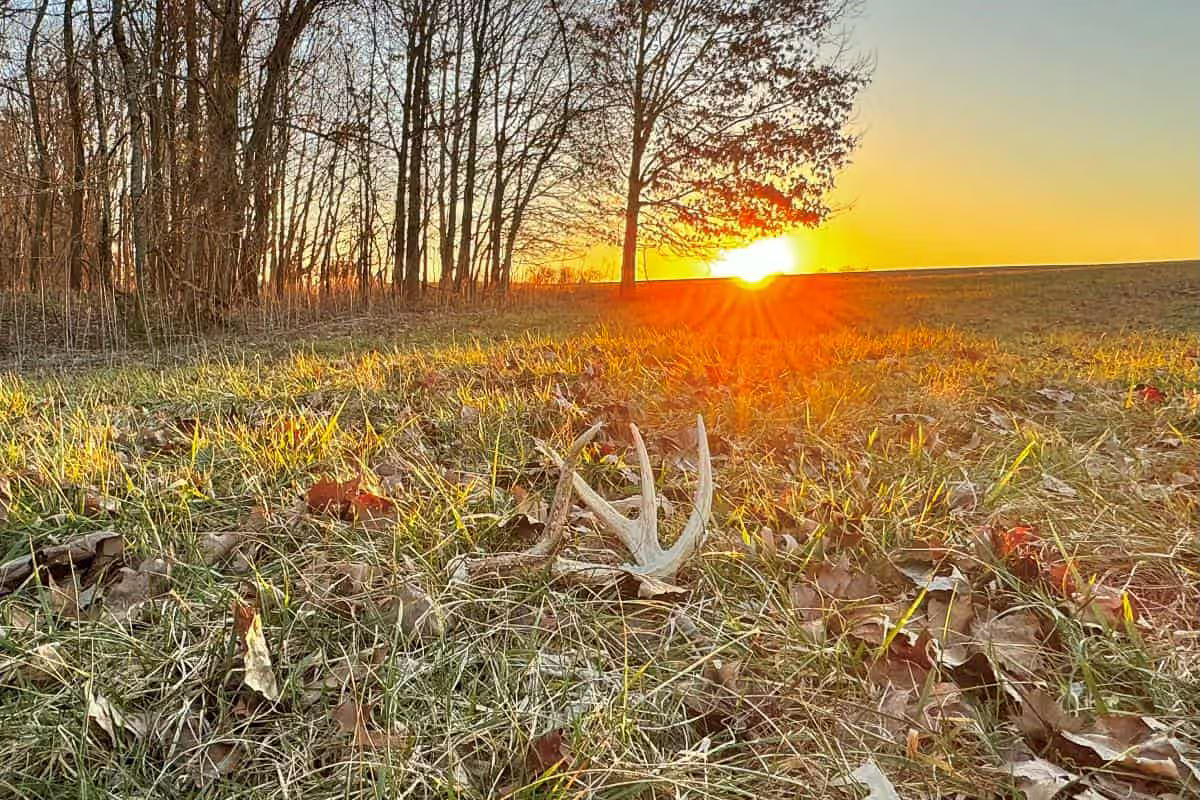
Deer season’s been over for a month, the woods have gone quiet, and somewhere out there the bucks you chased all fall and never got a shot at are dropping their antlers. That’s all shed hunting is. You go walk the same ground you hunted and look for the deer antlers those bucks naturally shed and left laying in the leaves.
For most of us its actually a great excuse to spend some time in the woods when everything else is shut down. But at the same time its just as much an opportunity to do some scouting – whether you intend to or not. Anytime you pick up a shed its telling you not just that a buck made it through the hunting season but where that buck was hanging out when you weren’t around to keep an eye on him during the winter months.
Don’t expect it to come easy either. Yea, some people walk out and pick one up in the first hour. Most of us go a few trips without touching one. But the first time you see a tine sticking up out of the leaves you’ll forget about the empty trips pretty quick.
Why Do Deer Shed Their Antlers
It’s hormones. A buck’s testosterone levels climb all fall for the breeding season, and once the rut ends those hormone levels crash. When the testosterone drops, the spot where the antler attaches to the skull breaks down and the antlers fall off. It doesn’t hurt him. A lot of bucks lose both sides within a day or two of each other, but it’s not unusual to see one walking around lopsided for a couple weeks either.
Then he starts right back over. Deer shed their antlers every year, and within a few weeks of the old ones dropping the new antlers grow out of the same spot on his head. By late summer he’s carrying a full rack in velvet. Antlers are the fastest growing bone known to scientists, which is a hell of a thing when you think about a buck building a whole rack in about four months.
It’s not just whitetails either. Every buck, bull elk, and bull moose sheds his antlers annually. Bull elk usually lose theirs between January and April. Caribou are the odd ones out, because the cows grow antlers and drop them too, and no other deer does that. For the rest of this I’m talking whitetail sheds, since that’s what most of us are walking for.
When Is Shed Season

Bucks drop their antlers anywhere from late December into early spring, and it varies from year to year and from buck to buck. Most whitetail bucks drop their antlers in February and March. The farther south you go the later it runs with it not being uncommon to find fresh sheds into early April.
In my experience, weather conditions affect the timing more than anything. A severe winter with deep snow and extreme cold stresses deer and causes them to shed earlier. Give them a mild winter and plenty of food and they’ll hang onto them longer. Mature and younger bucks don’t always drop during the same timeframe, so don’t assume most of the bucks have dropped because you saw two without antlers.
If you call the Midwest home, the first week of March is probably as good as it gets. By then enough bucks have shed that its worth putting in some miles on the ground you plan on looking.
Don’t go rushing to pull your trail cameras the instant the season closes. That trail camera intel can be useful. Personally, I leave them running and when most of the bucks start showing up with one or both sides missing I know its time to start walking.
Yes, you’ll find a shed or two in January if you go. But I’d rather find a few less sheds than run deer around when they’re at their weakest. Waiting until the worst of it passes is good practice whether your state makes you or not.
Where to Find Shed Antlers
The short answer is wherever the deer are spending their winter. It’s the same three things you’d look for in deer hunting. Where are the food sources, where’s the bedding cover, and what trails are they using to get between the two?
Feeding Areas
By February the deer are living on whatever late season food sources are left, and around here that means cut corn, standing beans, a food plot, or whatever the combine missed. Walk the field edges first, then the cover right off the edge. A buck that’s feeding heavy beds overnight within a couple hundred yards of the food, and that’s where a lot of dropped antlers end up.
Bedding Areas
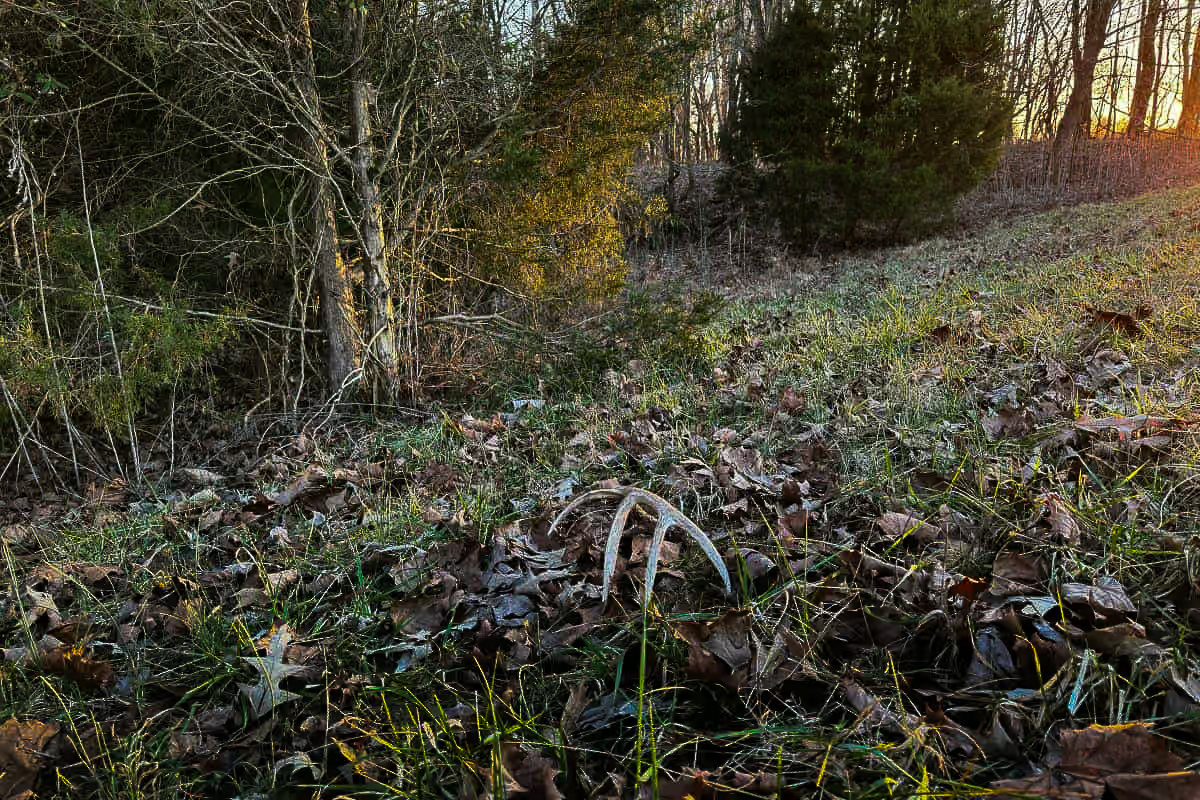
If I could only walk one kind of spot it’d be bedding areas, because that’s where a buck spends most of a winter day. Look for thermal cover first. Cedar and pine thickets provide cover from the wind and hold heat, and south facing slopes catch the sun all afternoon. Brushy thickets and any thick cover close to food get used hard in winter. The more hours a buck spends laying in one spot, the better the odds his antlers are laying there too.
The Trails Between Them
Then there’s the trails between the two. Pay attention to creek crossings, fence lines, funnels, and ridgetop trails. The tracks, droppings, and old rubs will tell you which trails are getting used right now and which ones are left over from November.
Ditches, Fences, and Other Obstacles
Here’s the one most shed hunters walk right past, and that’s anywhere a buck has to jump or climb. Ditches, creek banks, fence crossings, a blowdown laying across a trail, anything like that. When he lands, that jolt is enough to knock a loose antler off. Check the landing side of every fence crossing you come to.
Do this for a couple seasons and you’ll know the bedding areas and travel corridors on your ground better than a summer’s worth of camera pictures will ever teach you.
Shed Hunting Tips That Find More Antlers
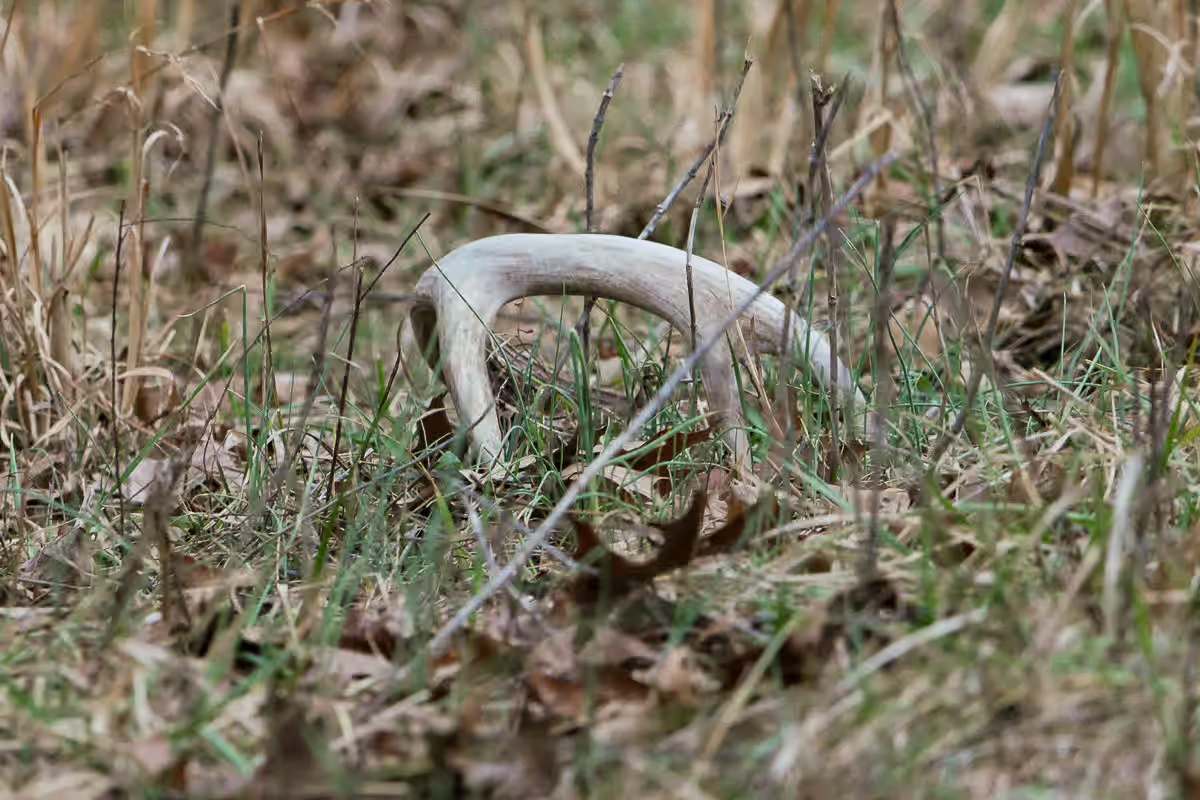
Most sheds get missed for two reasons. People walk too fast, and they don’t walk far enough.
Slow Down and Look at the Ground
Walking slowly and scanning the ground does more for your odds than anything else you can do. Keep your eyes ten to fifteen feet out in front of you instead of on the horizon, and every so often stop and turn a full circle. You’re usually looking for one tine sticking up, not a whole antler laying out in the open, and a shed you just walked past can look completely different once you see it from the other side.
Put in the Miles
Ten to fifteen miles in a day isn’t unusual for the serious shed hunters, and that’s most of why they find so many. You don’t have to start there. But finding sheds is a numbers game more than anything, and there’s no way around walking.
Grid Search
When you’re in a spot that ought to hold sheds, or you’ve just picked one up, run a grid search. Walk it in straight lines back and forth, close enough together that you can see all the ground between passes. It’s boring, but it works. Bucks often drop both sides within a short distance of each other, so grid the area around the first one before you move on.
Use Your Binoculars
Get up high and put your binoculars to good use. You’re on the lookout for that telltale shape of an antler or a bit of colour that just doesn’t fit in with the rest of the leaves and with a good pair of binoculars you can pick out antlers from a distance without having to trudge over every single inch of ground. Antlers can be particularly easy to spot after a bit of rain when they’re all shiny and new – much easier to pick out from far away than anything that’s all dull and worn.
Watch the Weather
An overcast day is definitely going to be more productive than a sunny one. There’s loads less glare and the shadows are all soft and gentle, so an antler just pops out of the leaves instead of getting lost in the foliage. But don’t start hunting when it’s snowed over – the antlers are much harder to spot, so wait for spring to arrive before you get out there. And get on with it before all the leaves start to come out and turn green – with the grass and everything getting so tall, finding antlers is a whole lot trickier than it is when the landscape is barren.
Write It Down
Write down the date and location of every find. After a couple years you’ll know when your bucks drop and where they drop, and that’s as useful as anything a trail camera tells you.
Shed Hunting With a Dog
Do you really need a dog to find sheds? No, but lets be honest. A trained dog will find more sheds than you will, and it’s not close. They cover more ground, get into the thick stuff you’d walk around, and find antlers by smell instead of sight. Plenty of serious shed hunters won’t go without one.
Labradors and golden retrievers are the standard for a reason. They want to retrieve and they’ll work all day. Beagles and bloodhounds can be trained to it too, since they already hunt with their nose.
The downside is the time. A good shed dog takes a year or two of steady work before it pays off. If you already run a retriever, though, it’s a no brainer.
Regulations, Public Land, and Private Land
Check your state regulations before you go. Some states make you buy a permit to collect antlers, some don’t open shed season until a set date, and antler traps will get you a ticket most places. Public land in some western states shuts down during heavy snow so people stay off the wintering deer and elk.
Private property is simple. Get permission or stay off. Private land tends to hold more sheds because it sees less foot traffic, and the more deer a property carries through winter, the more antlers it’s holding come March. A landowner who lets you deer hunt will usually let you walk for sheds too if you ask.
Is public land worth walking with everybody else out there? Sure, if you’re willing to walk farther than they are. The obvious spots near the parking lot get hit first, so plan on other shed hunters and get past where everybody else quits.
What to Bring
You don’t need much beyond a pack with room for antlers, a pair of binoculars, water, a couple snacks, and some wipes in case nature calls.
Boots are the one thing worth spending real money on. I played the game of buying a new pair of boots every spring because they were falling apart by the end of turkey season, and the pair of Crispi boots I’m wearing now have been going four years strong. You want waterproof hiking boots that come up over the ankle with good tread, because late winter ground is wet and you’re going to cross creeks and mud. The difference between good boots and cheap ones is the difference between walking eight miles and quitting at three with sore feet.
Run a GPS or a mapping app, like OnX, on your phone. It keeps you off private lines, keeps you from getting turned around, and lets you drop a pin on every find.
And yea, it’s exercise. Ten miles across ridges, creek bottoms, and cutovers is a workout whether you find anything or not. Plenty of people are out there as much for the walk as for the antlers, and there’s nothing wrong with that.
Take the Family
Shed hunting is the easiest way I know to get somebody in the woods who’s never hunted. There’s no gun, no sitting still, and nobody needs any hunting experience to do it. Kids can talk, run around, and dig in the leaves the whole time.
Kids are close to the ground and they’re not in a hurry, so they find sheds adults walk right over. They learn how deer use the woods without anybody turning it into a lesson, and their first shed is a big deal to them. It sticks.
It sharpens your eye too, kid or grown man. You start noticing tracks, beds, and trails you’d have walked past before, and that carries straight over into deer hunting.
What to Do With Your Sheds
Before you do anything else with a shed, get the information out of it. It tells you a buck survived the season, and it tells you where he was in February, which is often nowhere near where he was in November. Match a shed to your camera pictures and you’ve tied a specific buck to a specific piece of ground for next fall.
Score them and write the date and location on the base. Antler size year over year says a lot about the food and the health of the deer on your property, and state biologists and land managers use that same kind of information for wildlife management.
The rest is up to you. People turn sheds into all kinds of home decor, from lamps and chandeliers to knife handles and furniture. Dog chews are the other big one, and a good size shed sells for more than you’d think. I’d keep the matched sets.
Where to Start
If you’ve never been, pick the field edge you saw the most deer on late in the season and walk it slow on the next overcast morning after the snow melts. Don’t try to cover the whole farm. Cover one piece of it right. If you find one, grid the area for the other side. If you don’t, mark what you walked and come back after the next rain. That’s most of what there is to it.