

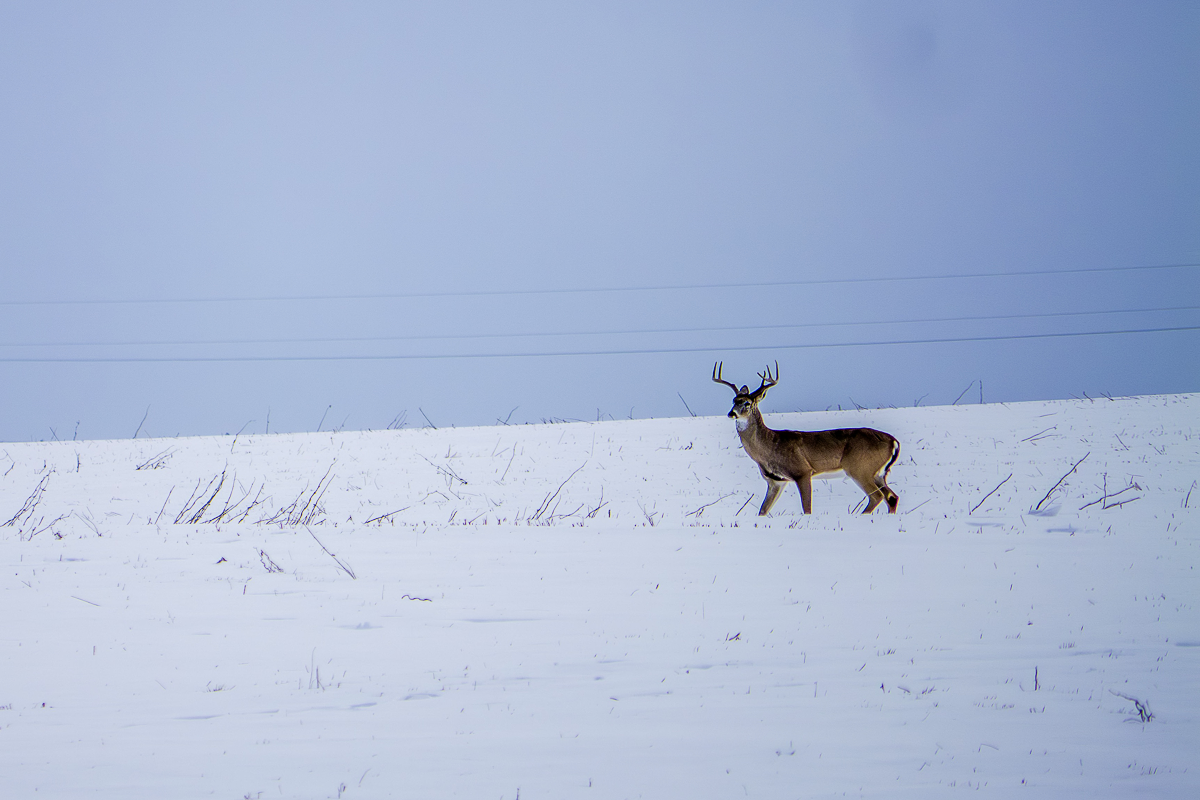
It was early January and the first sunny afternoon after a front, that dropped five inches of snow, moved through. Gage (my nephew) and I were set up on the edge of a cut corn field thinking with the fresh snow and good bedding cover close by we were in the driver’s seat for a successful afternoon hunt. An hour in, deer started pouring out of a block of timber on the neighbor’s farm, 600 yards away. They crossed the neighbor’s field, walked past us, and kept going another 300 yards through the cut corn we were setup on without dropping their heads once. They were headed to a winter wheat field at the far end of the field we were sitting.
Most deer hunters hunt the late season the way we hunted that evening. Find the closest decent food to the cover, sit the edge of it, and find something to blame when nothing shows.
January deer don’t act like early season deer. They’ve been bumped, shot at, and hunted for three months, and about the only thing that gets them on their feet in daylight is food. That’s why late season success comes down to two things: figuring out which food sources deer actually prefer once it turns cold, and learning the routes they take to reach them.
Step 1: Rank every food source within a mile
A successful late season plan starts before you ever climb a tree. List all the food sources within a mile of where you hunt. And here’s the part most guys skip: include the neighbors. Deer could care less about property lines. If the best food sits on the other side of the fence, that’s where they’re going. Meaning, you’ll have to hunt the travel routes they are taking to get there.
Rank what you find roughly in this order:
- Standing corn or standing beans, if any are left.
- Fresh cut grain fields, first two or three weeks after harvest
- Green cereal grains, meaning winter wheat, rye, or oats, and late-season deer will also key on green food sources like honeysuckle
- Brassicas, but only after a hard frost has sweetened them
- Picked over waste grain gives way to acorns and woody browse, along with native browse
My mistake that January was ranking cut corn first. At that point in the season the waste grain in that field had been picked over and the deer knew there was nothing left to feed on there.
One more thing to consider during this step. Your ranking has a shelf life. A ten acre freshly cut grain field or food plot feeding 60 deer will get wiped out pretty quick. The day that happens, the deer will shift their feeding habits somewhere else.
If deer disappear off a food source that was stacked a week ago, don’t assume they went nocturnal. Go look at the field. Nine times out of ten it’s eaten down and they’ve moved to whatever ranked second.
Redo this step every couple of weeks. It takes ten minutes and it’s the difference between hunting deer and hunting where deer used to be.
Step 2: Burn one evening watching instead of hunting
This is the step that separates guys who are successful whitetail deer hunting the late season bucks from guys who freeze on field edges. Give up one hunt.
Park somewhere you can see the most ground possible and break out the binoculars or spotting scope for long-distance glassing to study deer movement without intruding, and watch until dark. You’re not looking for antlers. You’re answering three questions:
- Where exactly do deer come out of cover?
- Which direction do they head once they’re out?
- Where do they stop and stay?
This evening of observation is a low-impact scouting move that avoids pressuring deer.
Trail cameras can help confirm daylight movement around that same route or destination food.
Step 3: Choose your setup type
You’ve got three honest choices once you know where they’re going.
Sit the route. My default nine times out of ten. Draw a line from bedding to the destination food and find the areas that funnel the deer between the two. These travel corridors also include staging areas just off the destination food, which lets you hunt a lower-impact setup before deer step into the open. Fence gaps, ditch crossings, a finger of timber between two fields. On that farm there was a gap in the fence line 250 yards from us that every deer we watched went through, and I stared at it all afternoon without it ever registering.
Sit the destination. Highest odds of seeing deer, but can be problematic when hunting a pressured mature buck that rarely makes it to the food source before dark. After the rut, a mature buck under hunting pressure may fall into a more predictable pattern of waiting until after dark to hit the open food. Most good late season food is an open field, with does and young bucks bedding closer to it as the weather gets colder. This can make access tricky but not impossible. Use the wind and terrain to your advantage to give you a clean entry and exit while keeping pressure off the field edge.
Sit the bedding exit. Closest to bedding, highest risk, but often the only setup that puts you on a pressured mature buck before dark. If he’s stepping into that field after dark, catching him in the first hundred yards of his trip is your one shot at seeing him with shooting light left. Some mature bucks relocate or shift tighter to cover when pressure builds, so key on bedding areas that still let you hunt without crowding them. You often only get one or two cracks at it, so save it for the right day.
Step 4: Pick the day, and know which days to skip
You only get so many good late season days. Don’t waste them.
Go when you see any of these:
- The first calm, sunny afternoon after snow or a hard front moves out
- Temperatures dropping well below the average for that week
- A warming trend after an extended freeze, when deer leave thermal cover to replenish
MeatEater’s Wired To Hunt has made this point for years, and my January hunt is a textbook example of it. A storm shuts deer down while it’s passing, and the first calm evening after it clears is often the best sit of the entire late season. Pent up energy, a day or two of light feeding, and easier travel all land on the same afternoon.
Stay home when you see these:
- The middle of a storm
- Day four or five of a long, hard freeze
That second one surprises people. Whitetails weigh the pros and cons of a trip to a food source. Sustained cold drops their metabolism so they can lie there and burn fat instead of walking. Deep snow and hard wind raise the price of every step. During a long freeze they simply stop paying it.
The trigger isn’t cold by itself. It’s change.
Step 5: Hunt afternoons and protect your access
Late season is an afternoon game, with mornings not being nearly as productive as they were during the rut.
Late Season deer feed at last light and bed near food overnight, so a morning hunt usually means walking through bedded deer in the dark. You blow out the exact deer you’re hunting and you learn nothing. Save your mornings for glassing and scouting sign.
For access, plan the walk in the same way you plan the stand. Access from downwind of where you expect the deer to be, stay out of the open, and give the bedding a wide berth even if it costs you 20 extra minutes. These deer have been hunted since September and they’re as sharp as they’ll ever be. That’s the opposite of early season hunting, where you’re dealing with deer nobody has bothered yet.
Step 6: Dress so you can sit until dark
The last 45 minutes were the only 45 minutes that mattered that afternoon, and Gage and I were both miserable for all of them. Neither of us said a word, which is the only reason we stayed and saw what we saw. If either one of us had spoken up at four o’clock, we may have bailed and driven home telling ourselves the deer weren’t moving.
Late season movement often happens during the last half hour of light. Late season is an afternoon game. Full stop. In cold weather, deer often bed longer to conserve energy and may show useful mid day movement when temperatures rise. If your frozen at 4:30, you built your entire plan around a sit you can’t finish.
Many hunters still force morning sits, even though deer may stay down longer this time of year. Don’t overdress on the walk in and walk slow enough that you don’t start sweating through your base layers. Minimizing human pressure matters because hunting pressure shapes deer movement patterns over time. Moisture will cause you to get cold significantly faster. Pack the bulk of your clothing in with you and get dressed at or just before you make it to the tree. Give bedding cover a wide berth, scout lightly pressured hunting areas, and avoid the spots getting hammered. Quiet exits matter too, and diversions can help pull deer attention away from your route out.
Put it together
Rank the food within a mile. Give up one evening and watch. Dial in your access and set up on either the travel route or food source itself, depending on what your intel tells you.
Gage and I froze half to death on a cut corn field that January and never fired a shot. But I’ve filled tags since then off what those deer showed us, and I’ve never again picked a late season stand just because the food looked good on a map.
The key isn’t just finding the food. It’s finding the preferred food.