

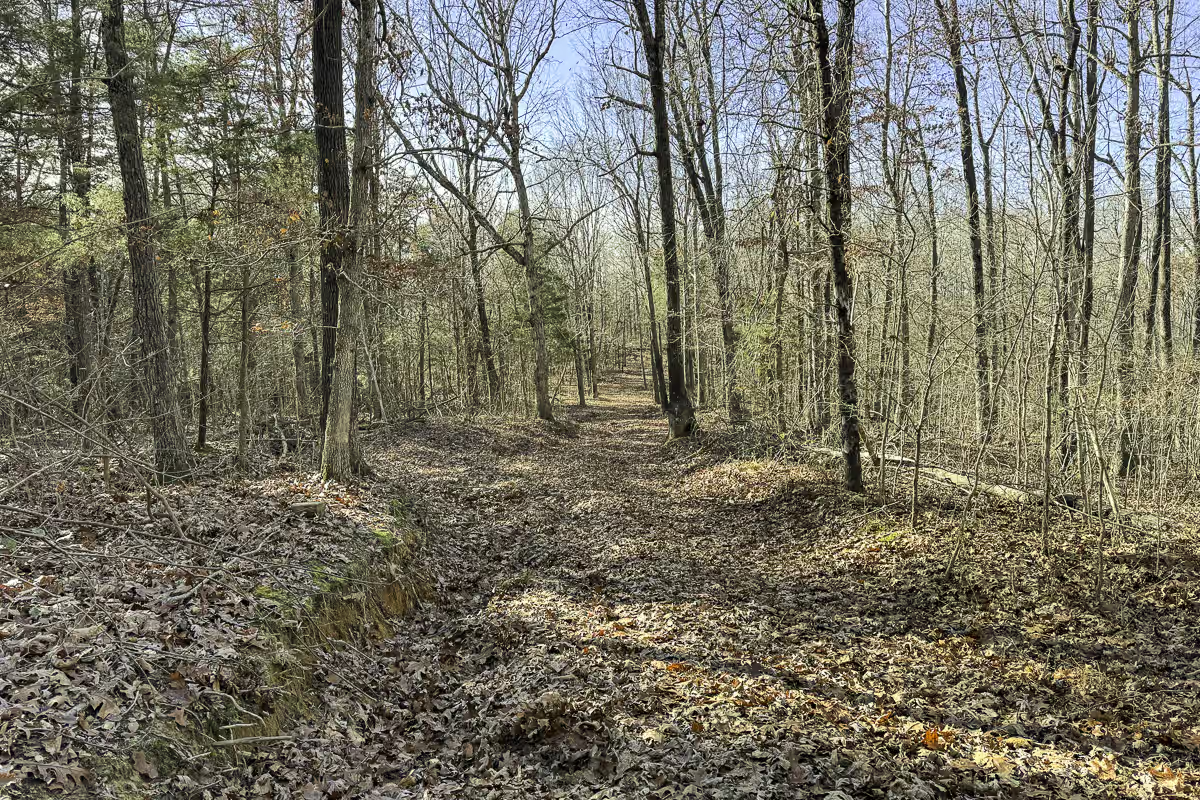
Several seasons back I watched a buck all summer and knew exactly where and when he entered the field every evening. His pattern held all the way up to the week before bow opener but I headed out the evening before opening day just to double check. Sure enough, the buck steps out at roughly the same time and at the same place. Fast forward one day and I’m setup in the tree I’ve watched the buck walk 30 yards past all summer and the night before. Lets just say he was a no show that evening and the next.
I scratched my head trying to figure out what happened the entire the next few days at work. Needless to say, it bothered me. The only thing that I could come up with was that he’d shed his velvet and started the transition to his fall range. I was wrong. The Thursday evening following my two uneventful hunts I was killing a little time and decided to pull out my phone to check the cell cam where he would enter the field. Sure enough he was on it. Entering the field at the same time and place I’d watched him do it all summer. The bucks pattern hadn’t changed. He knew I was there before I ever made it to my stand and like mature bucks do, made his exit without me having a clue. My mistake was my access to the stand.
Without a ton of just outright luck, its not enough to just know where a mature buck is, his pattern, and the tree you need to be in to kill him. Access, or how you plan on entering and exiting a particular stand site, is in my experience the other fifty percent of what it takes to actually wrap the tag around a mature buck.
Why access is important
The wind for my stand was bullet proof, the weather was cool for that time of year, and the buck had been on the same pattern for the past month. Going in I knew I’d have and opportunity at him. What I didn’t account for was how my entry and exit would affect my hunt. Looking back on it now and having several more seasons hunting that particular farm I know the buck winded me before I ever made it to the tree. The route I’d taken to access that stand had one hundred yard stretch that the wind would carry my scent directly in the direction of where the bucks would bed during that time of year.
If deer are able to see or smell you before you get to your tree stand you’re already at a disadvantage. They know you’re there. It doesn’t matter what intel you have prior to the hunt or what the wind is doing at the tree you plan on climbing. When your access is wrong, more times than not the hunts over before it ever actually starts.
How to plan entry and exit routes
After messing up this particular hunt and probably a few others that I’m unaware of, I am very meticulous when it comes to planning how to enter and exit where I plan to hunt. The following is my process for determining the best access route for stand.
First, determine where the deer are likely bedded if you’re hunting the afternoon or where they are feeding for morning hunts. During the afternoon, deer will filter out of bedding to the preferred food source and the opposite for mornings. The idea is to determine where the deer are likely at while you are making your move in.
Secondly, look at maps to determine the route that will keep you out of sight and with the wind advantage on the way in. Sometimes this means having to walk an extra couple hundred yards, or in extreme cases, half mile. Trust me, the extra leg work is well worth it when the plan actually comes together. Terrain features also help with this. Creek beds aid in keeping you out of sight and if the banks are deep enough can aid in reducing your scent profile. In hill country setups instead of walking a ridge top to your stand, look for ditches or ravines you could come up to aid in concealment. Remember the trick is to stay out of sight and where the deer can’t smell you.
Lastly you need to know how to get out undetected during the hunts you don’t harvest something. This could be the same way you came in or you might need to have a completely different exit strategy. The deer will likely be in a completely different area when you leave so keep this in mind while doing your map work.
It’s also important to note that just because you figure out a bullet proof way to access a stand it’s not a time to get lazy. Whitetail patterns change constantly throughout the course of the season. Changing food sources and bedding areas, hunting pressure, and the rut all affect how deer use a property. Adjust your access based on what you are currently seeing and the changing patterns.
Final thoughts on entry and exit routes
That buck taught me a lesson I should have learned a lot sooner. I had the wind, the weather, and a month of intel telling me exactly where he’d be, and none of it mattered because he winded me on the walk in. I had the first half of the job figured out and never gave the other half a thought.
So before you climb a tree this fall, spend as much time on how you’re going to get there as you spent on where to hunt. Pull up the map, mark where the deer will be bedded or feeding while you’re walking in, and find the route that keeps you out of sight and downwind, even if it’s the long way around. Then figure out how you’re getting back out. Yea, it’s extra leg work, and some evenings you’ll get to the stand later and sweatier than you’d like. But it beats sitting in the right tree wondering why a buck on a bullet proof pattern never showed.