

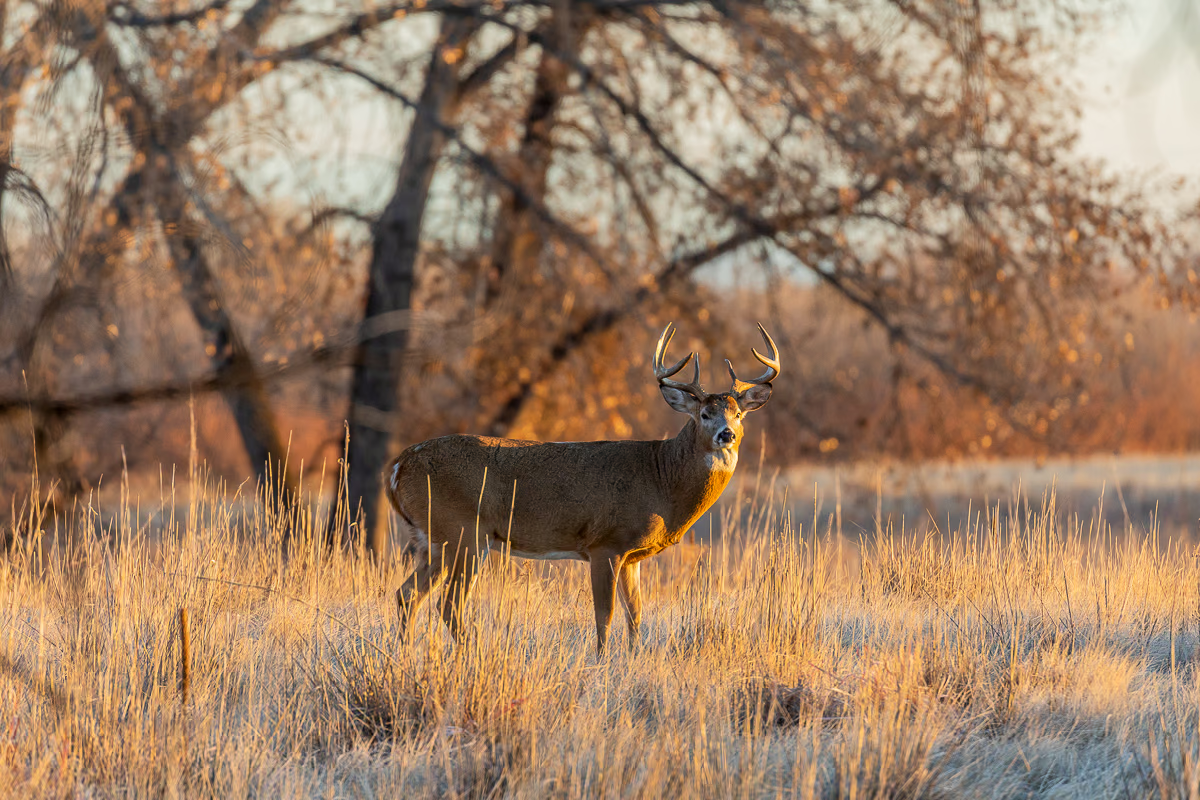
Walk into any sporting goods store and you’ll find a whole aisle of cover scents and scent eliminating sprays. I’ve used plenty of them. But in my experience the best way to fool the nose of a big buck isn’t in a bottle. It’s hunting the wind.
A mature buck lives and dies by his nose. If you let him get downwind of you, or cross the trail you walked in on, the hunt is over before it starts. Here’s how I play the wind, broken down into the five things I actually think about:
- Plan your approach to the stand
- Let the deer have the wind, or let them think they do
- Account for topography and terrain
- Watch the thermals
- Plan for multiple wind directions in the offseason
Plan Your Approach
Hunting the wind starts long before you climb into the stand. Every step on the way in and out matters just as much.
Say you’re hunting an afternoon sit. Figure out where the deer are likely bedded and enter from the downwind edge so your scent blows away from them. Sometimes that means a longer, roundabout walk. That’s a small price to pay compared to blowing out the buck of a lifetime, and it’ll put more deer in front of you over the long run.
Keep a wind indicator handy on the walk in. You never know when a gust or a swirl will give you away, and it’s better to know before the deer do.
Let the Deer Have the Wind… Or Let Them Think They Do
This one sounds backwards, but hear me out. A mature buck likes to travel with the wind in his favor, moving between bedding and feed where his nose covers him.
So give him a wind that feels safe. Set up where the prevailing wind seems to favor the deer but actually angles just enough that your scent never crosses his approach. He trusts his nose, walks the route he wants to walk, and never knows you’re there. You’re using his confidence against him.
Topography and Terrain Change Everything
In flat ag country you can mostly trust the forecast. In hill country you can’t. The weatherman can call for a straight north wind all day and the woods will still do their own thing.
Low spots like ravines and creek beds swirl. Set up down in one of those and a deer will smell you from three directions. Instead, hang your stands in the upper third of a ridge where the wind stays steady and your scent behaves.
Erosion ditches on steep slopes are worth a hard look too. Deer skirt the roughest parts of those ditches and travel the edges and tops. I like to hunt the upper side where I can cover both the ditch crossing and the ridgetop. Your scent drifts above the deer while they work those corridors, which pays off big when rutting bucks are cruising the most efficient routes.
Use the Thermals
So what are thermals? They’re the vertical movement of air. In the morning the sun warms the ground and air rises. In the evening the air cools and sinks. On calm days or days with a fickle wind, thermals will make or break your setup.
For morning hunts, set up above where you expect deer to travel so the rising air carries your scent over their heads. For evening hunts, do the opposite. Hang your stand where falling air pulls your scent away from the deer. The head of a deep ditch or ravine is a good example, because the evening thermals will drain your scent right down into it and away from any noses.
Plan for Multiple Wind Directions
The offseason is when this all comes together. While you’re scouting, find stand locations for different wind directions so you always have a spot that keeps you downwind of the deer.
That’s also the time to dial in the access route for each stand and confirm the wind stays steady at each location. Do that work in the summer and you can hunt more often during the season without pressuring the mature buck you’re after. Wait until November to figure it out and you’ll educate him instead.
Why Play the Wind?
Because nothing else guarantees anything. Studies have put a whitetail’s sense of smell anywhere from 500 to 1,000 times better than ours. He doesn’t need to see you to know you’re there.
It doesn’t matter how good your scent spray, scent free detergent, or cover scent is. The only way to be sure a deer never smells you is to never let him get downwind of you or cross your entry route. That’s it.
Do Scent Control Products Work?
Some. Sort of. A good scent control routine can shave down your scent footprint and buy you a little forgiveness on a marginal wind. But none of it is 100 percent, and relying on products alone is a mistake.
Use them as one piece of the puzzle. Spray down, wash your gear in scent free detergent, avoid gas stations and greasy spoons on the drive in. Then hunt the wind anyway, like none of it worked.
How to Check the Wind
The powder bottle wind checkers at the sporting goods store work fine, but they only tell you what the wind is doing right where you’re standing.
If milkweed grows where you hunt, gather some pods. The seeds and floss inside float on the air, and when you turn them loose you can watch the exact path the current takes, sometimes for a hundred yards or more. It’s free, and it tells you more than the powder ever will.
Wrapping Up
A deer’s nose is his ultimate sentry, and the wind dictates most of your moves. Learn how it works through your hunting ground, plan your access around it, use the thermals, and have a stand ready for whatever direction the weather gives you. Do that and you’ll see more deer, get away with more sits, and sooner or later catch that cautious old buck with his guard down.