

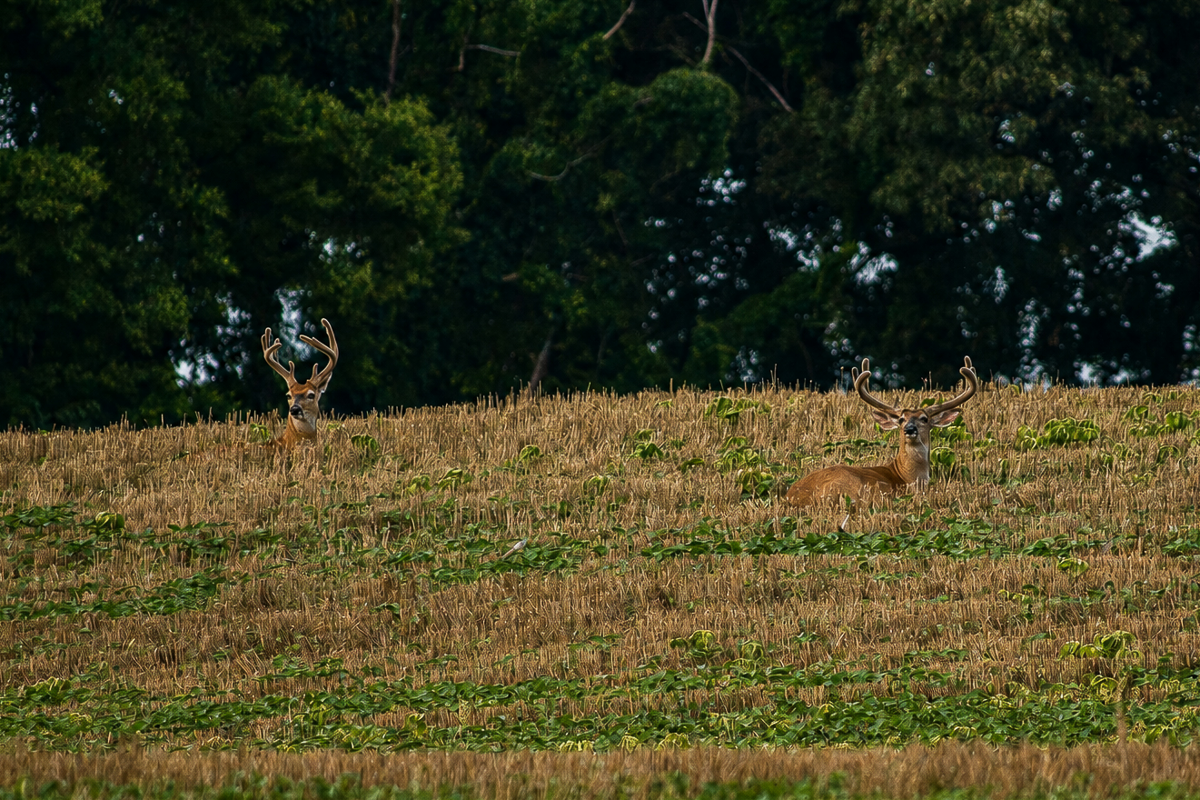
There’s a stretch of early September here in western Kentucky where I can drive past a standing soybean field and confidently say with 95 percent certainty that deer are bedding in it. At this point in the growing cycle the beans are chest high. Tall enough that a buck bedded in them might as well not exist. Watch one of these fields long enough during the evening and deer seem to just pop up out of nowhere.
This window doesn’t last long however. The beans turn, crops start getting harvested, and bedding areas start shifting. A deer spends the majority of the daylight hours in their bed, and every move they make starts and ends there. Many hunters build their season around food sources, while important, it’s only half of the equation. Bedding is the other half.
To find deer bedding areas you first need to know how deer choose them and the difference between buck and doe bedding. Once you have an understanding of that you can start by studying maps to find likely bedding areas and confirm them on foot.
Understanding Deer Bedding Areas
Before logging into OnX or breaking out the aerial / topographic maps looking for bedding areas its a good idea to know what you’re actually looking for. Yes, a doe and buck bed come from the same animal but that’s where the similarities end.
Doe Bedding Areas
Does bed in groups, in areas with a form of cover like tall grass, brushy edges, or timber, generally in close proximity to food. The areas they bed aren’t what give them the advantage of detecting danger but rather the eyes, ears, and noses of the group. If you find multiple beds clustered together you’ve more than likely found a doe bedding area.
Buck Bedding Areas
A single mature buck doesn’t have the five sets of eyes helping him out, meaning he needs to be more meticulous about where he beds. Mature bucks often bed alone in thicker cover that gives him the advantage. The setup for these beds is simple and damn near fool proof. Something solid at his back, with the wind blowing in from behind him, and a good visual of everything on his downwind side. Find a single bed tucked away in an area with little to no human intrusion that meets the characteristics mention above and odds are you’re looking at a buck bed.
Bedding Changes With the Calendar
Whitetails also change where they bed based on the time of year and the amount of cover available. From summer through early fall cover is everywhere. The leaves are still on, unmanicured grassy areas are chest high, and crops are still standing. Deer have a multitude of places they can bed during this stretch of the year.
Fast forward slightly and crops start being harvested and leaves begin to fall. Once this starts, the amount of available cover for deer to bed starts to decrease. This is when I see deer on the properties I hunt here in western Kentucky start to bed in the areas that have cover year round.
How to Find Deer Bedding Areas on a Map
Maps are where I start when looking for possible buck bedding areas on a new piece of property. For one they allow you to narrow down the possible locations deer are likely to bed before confirming with boot leather. Secondly, you cut down on the amount of human intrusion caused by aimlessly walking a piece of property.
What to Look for on Aerial Imagery
The satellite view is the first thing I use and I’m looking for the following.
Points of cover. Areas where cover forms a point or finger.
Edges. We’ve all heard the saying that whitetails are edge animals. The most common edges I’ve found deer beds include: clearcut meeting mature timber, swamp meeting hardwoods, thicket meeting open woods.
The nastiest cover. Thick brush or cover are the most talked about form of deer bedding areas. These are patches of brush and young growth that look miserable to walk through.
Lack of human intrusion. In my experience this is the most important factor when looking for areas where mature bucks are likely to bed. This could be an area a mile or so away from the road or a spot next to the parking lot that’s overlooked by hunters.
How to Identify Deer Bedding Areas on Topo Map
In hill country or areas with any type of elevation change the topographic map is the next step. Here’s what I’m looking for.
Ridge points and benches. Ridge points act very similar to the points of cover and benches provide deer with a flat place to bed in steep terrain. Both provide deer with a view below them, and the advantage of the morning thermals pulling scent up the hill to them.
Leeward ridges. Whitetails will also use the leeward sides of ridges, especially in high wind situations. They still have the wind advantage as scent comes across the ridge top and drops down to them while they watch everything below them.
South-facing slopes. Once cold weather sets in, sunlight can be just as valuable as food to deer. A south facing slope receives sun for the majority of the day, keeping these areas warmer.
Filter the Likely Buck Bedding Locations
Once I’ve analyzed a piece of ground with maps and have several areas marked as likely bedding areas, I’ll grade them similar to how a mature buck would. Is the spot away from human traffic, is their back cover, and most importantly, what winds make the particular spot work?
A mature whitetail buck won’t use just one bed. They have several, spread out across their core area, and the wind is often the deciding factor on where they decide to bed on a given day.
Boots on the Ground
Map work gets you a list of suspects, but walking the ground is what gets you proof. Once the season’s out, late winter for me, I go put eyes on every spot I marked.
An actual deer bed is an oval depression pressed into the leaves or grass, roughly the size of the deer that made it, and a fresh one still holds its shape like somebody just got up off a couch cushion. Around it you’re checking for tracks, droppings, and the giveaway most hunters miss, white belly hairs left behind in the bed itself. Trails in and out tell you which way he enters and/or leaves, and rubs near a lone bed tell you it wasn’t a doe.
Putting It All Together
Come September I’ll be watching those bean fields again, and by late October the deer bedding in them will have moved somewhere else entirely. That’s the whole point. Food sources get all the attention, but if you only know where deer eat, you only know half the story. The bed is where a deer spends most of his daylight hours, and every move he makes starts and ends there.
You don’t need to walk every acre to figure this out. Start on the map. Mark the points of cover, the edges, the benches and leeward ridges, the spots nobody else wants to walk to. Grade each one the way a mature buck would, and pay attention to which wind makes it work. Then wait until the season closes and go confirm them on foot. Yes, it’s tempting to go check them now, but bumping a buck out of his bed in October put him on edge the rest of the season. Late winter tells you the same story without the consequences.
Do that on one property this year and you’ll hunt it differently next fall. Not because you found more food, but because you finally know where the deer are coming from.