

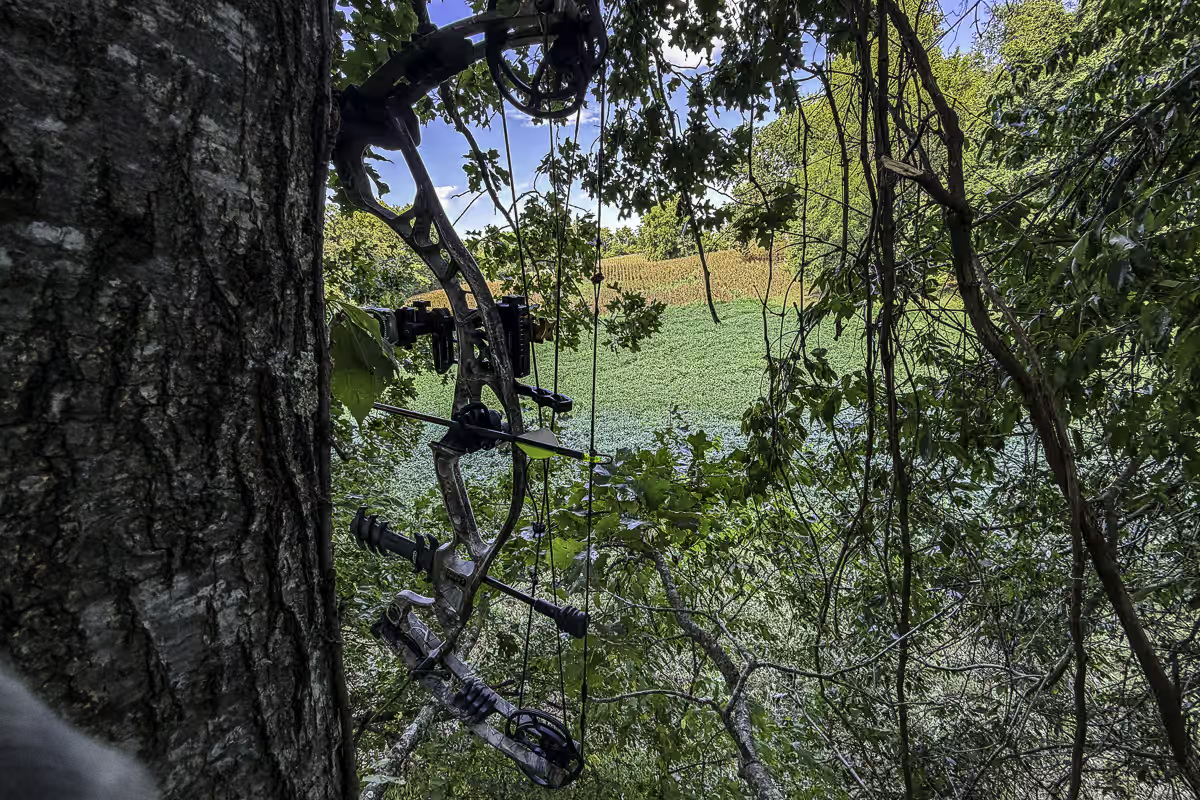
The standard advice on hunting pressured whitetail bucks is to go deeper on public or to hunt less . Meaning get farther from the road than the other guys when hunting public, or find your best spot, and save it for the right day on private. I hunted that way for years, and as far as advice goes it’s fine. It just skips the first question you should be asking when hunting pressured bucks. Before you go anywhere, you need to know who that buck is actually hiding from. On public land it’s a crowd. On the private ground most of us hunt, it’s usually one person, and the answer changes everything about how you hunt him.
I learned that the first few years I started strictly hunting the most mature bucks on our private ground. Every buck I got serious about would eventually ghost me, and every time I had somebody to blame. The neighbors were hunting hard. The farmer was working the crops. It took me longer than I’d like to admit to notice the one thing all those bucks had in common, which was me.
Figure out where the pressure is coming from
Before moving a stand or pulling a camera the first thing I do now is figure out where the pressure is coming from.
Public ground is easy to diagnose. That big buck is getting pressure from a lot more hunters than just you, and he’s built his whole fall around avoiding them. Private ground is a different deal, unless you’ve got a bunch of people hunting the same piece week after week. If that’s your farm, treat it like public land and skip to the next section. But if it’s just you, or you and a couple of buddies, and a buck goes ghost, odds are it wasn’t the neighbors and it wasn’t the farmer. It was your pressure.
Hunting pressured whitetail bucks on public land
On public land, pay attention to the other hunters before you pay attention to the deer. Figure out where they’re parking, how they’re getting in, whether that’s a firebreak, a logging road, or a marked trail, and where they end up hunting. Most guys walk in from the same pull-offs, follow the same easy routes, and set up within sight of the same features. Once you’ve mapped that, you’ve mapped the pressure.
Then put yourself in the buck’s shoes. If you had to avoid every one of those hunters, where would you go? The answer is the overlooked ground, the corners nobody walks through because nobody thinks they’re worth the walk. Sometimes that’s a mile deep. Sometimes it’s a scrap of cover so close to the road that everybody hurries past it on the way to somewhere better. I laid the whole method out in reading hunter pressure on public land, but the short version is that the other hunters tell you where the buck went.
On private land, look at your own pressure first
A buck doesn’t get to mature status by going through life blindly. Odds are he knows where your preset stands are, because he’s run into human scent in and around them in years past. If you use the same easy access into and out of a spot, he picks up on that quick and learns to steer around it. None of that takes a genius deer. It takes a predictable hunter, and for a lot of years that was me.
So on private ground the work starts with a long, hard look at what you’re doing to apply the pressure. For me it was two things. I was getting sloppy with my access, walking in whatever way was shortest without much thought for the wind or what I was walking through. And I was overhunting one stand, sitting the same tree day after day because that’s where the pictures were. Either one is enough to move a mature buck.
What changed is that I plan the walk in around the wind before I pick the stand, and I don’t sit the same tree two days running. The routes are their own article, Entry and Exit Routes: The Other Half of Killing a Mature Buck, and they matter more than the tree does.
Don’t be tied to one tree
Public or private, this is where the hang-and-hunt approach shines. A pressured buck has learned your preset stands and the trails to them. He hasn’t learned anything about a tree you picked this morning off the wind and the sign, and he never will if you only sit it once.
The downside is real. You carry more, you hang in the dark, and you’ll set up in a few trees that look a lot worse at daylight than they did on the map. I’ve done it. But a mobile setup means the pressure on any one spot lasts a single morning, and a buck can’t pattern a tree you’ve only sat once.
That’s what I’d tell a buddy who called me about a buck that quit showing up. Figure out who he’s hiding from, quit being married to one tree, and go find where he moved to, because he’s still in there. Every buck I ever watched go ghost was still living on that farm. He’d just figured out where I’d be.