


I passed a good buck a few seasons ago because he was quartering-to at 30 yards and it just wasn’t a shot angle I felt comfortable taking with archery equipment. A buddy told me later I should have taken him, and maybe he’s right. In deer hunting, shot placement isn’t about what happens when everything goes right. It’s about what happens when it goes wrong.
Where you aim comes down to shot angle , the weapon you’re deer hunting with, and your honest effective range . Get one of those wrong and you own whatever happens next. That might be a 90 yard blood trail, or it might be a deer you never find. I’ve experienced both, and the second one stays with you a lot longer.
Deer Anatomy: Where to shoot a deer
The vital areas on a whitetail are about the size of a paper plate. Heart and both lungs, sitting between the front shoulder and the last third of the ribcage, and everything here is about getting your bullet or arrow through that plate from whatever angle he gives you.
Here’s the part most hunters get wrong. That front shoulder looks like a wall of bone but it really isn’t. The shoulder blade is a triangle that points forward and down, and it ties into the leg bone closer to the bottom of the neck than the center of the shoulder. You’ve got more clear path in there than the deer looks like he’s giving you.
The heart is only about four inches tall and sits low in the chest, in line with the middle of the front leg. It also sits at about a 45 degree angle, which is why a shot that catches the top of the heart usually catches lung on the way through.
The lungs are the real target and they’re bigger than most deer hunters give them credit for. They fill the space between the shoulders and run back about a third of the way into the body. That’s your margin. A couple inches back from perfect still gets both lungs, and a couple inches high usually does too.
Behind the diaphragm you’ve got the liver. A liver hit kills, but it takes hours instead of minutes and nobody should aim there on purpose. It matters because it’s what you catch when you aim too far back on a quartering shot, and that changes how long you sit before you go looking.
One more thing worth saying. A yearling doe’s vitals are about half the size of a mature buck’s, so if you’re shooting a young deer your paper plate just turned into a saucer.
Aim Point by Weapon
A rifle bullet will break bone and keep right on going. An arrow won’t, or at least you shouldn’t bet a deer’s life on it. That’s why your weapon decides your aim point almost as much as the deer’s angle does.
With a bow, put it one to two inches behind the shoulder crease, between halfway and the lower third of the body. That line keeps your arrow off the shoulder bones and a double lung shot. I’ve been shooting the same Hoyt I bought new in 2013 and that shot has never given me a reason to get fancy.
With a rifle you’ve got more latitude. Take the same shot behind the shoulder and save yourself some meat, or aim on the shoulder itself, halfway to two-thirds up and just forward of center, and put him down where he stands. The shoulder shot costs you venison and the lung shot might cost you a 100 yard tracking job. Pick which one you’d rather pay.
A muzzleloader uses the same aim points as a rifle, but be honest about range. You get one shot, and reloading while a wounded deer walks off is nobody’s idea of a good morning. And if you’re shooting a crossbow, use the same shot placement you could with a compound bow no matter what the guy behind the counter at the sporting good store told you. It launches an arrow, and arrows follow arrow rules.
Broadside Shot: The Best Shot You Can Get
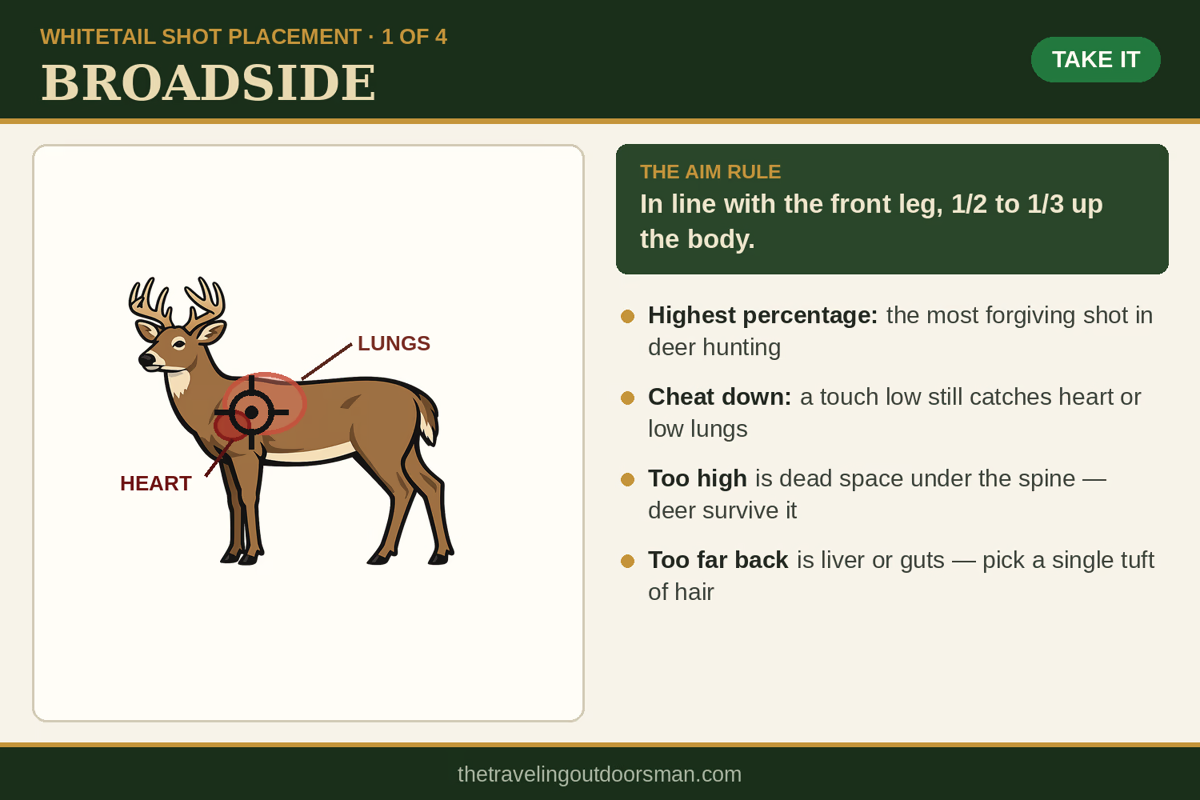
A broadside deer at eye level is the highest percentage shot in deer hunting. Take it every time it’s offered and don’t overthink it.
Aim in line with the front leg, between halfway and the lower third of the body, and drop a couple inches under that if you want the heart. Because of the way the heart angles in the chest, being a touch low works out better than being a touch high. If he drops at the shot you’re still in vitals, and if he doesn’t you’re in heart or low lung anyway.
Too high and you’re in that dead space under the spine, and some of those deer live. I had this happen to me during the 2020 deer season but was able to eventually harvest the buck during the rifle season. Too far back and you’re in the liver or the guts. The fix for both is the same. Pick a spot, a single tuft of hair, and aim at that instead of at the deer.
Quartering Away Shot: The Bowhunter’s Favorite

Plenty of experienced bowhunters would take a quartering-away deer over a broadside one if you let them choose. The front shoulder has moved out of the way, the vitals are wide open, and he’s looking somewhere else while you draw.
Shoot for the far shoulder. Follow his far front leg up to mid-body and that’s where you want the arrow to end up, which slides your entry point back from where it would sit on a broadside deer. The steeper the angle, the farther back that entry goes.
So how steep is too steep? Here’s the test I use. If getting to that far lung means entering behind the last rib, you’re not shooting a quartering-away deer anymore, you’re gut shooting one and hoping. Wait him out. Deer rarely hold one angle for long.
Rifle hunters can push the angle harder, because a good bullet will plow through more deer to get where it’s going. But the same exit point thinking applies and so does the same discipline.
Quartering To Shot: When to Take It and When to Pass
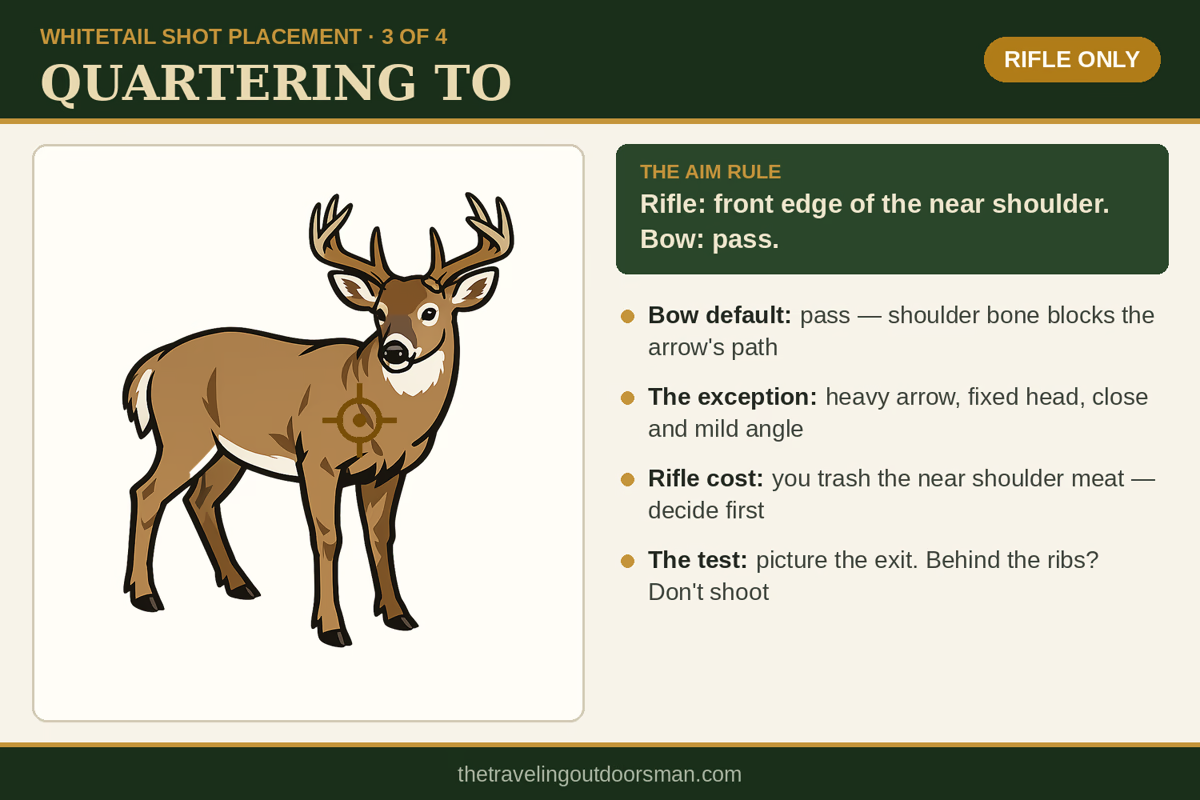
Is a quartering-to shot ever a good idea with a bow? For most bowhunters, most of the time, no. To reach the vitals your arrow has to beat the shoulder blade or the leg bone on the way in, and that’s a bet you lose to often.
Yea, there’s a crowd running heavy arrows that penetrate deeply who will take a mild one at close range, aiming for that soft crease between the chest and the shoulder, and some of them are very good at it. But that’s an advanced play with the right equipment, and if you have to ask whether your setup qualifies, it doesn’t.
With a rifle it’s a different conversation. Aim at the front edge of the near shoulder and picture the bullet coming out through the middle of the opposite ribcage. You’ll kill him clean, and you’ll also trash that near shoulder and probably some of the far side, so decide how much you like shoulder roasts before you press the trigger.
One test settles this, bow or gun. Don’t think about where the projectile goes in, think about where it comes out. If the exit is anywhere behind the ribs, pass.
Shooting From a Treestand Changes Everything
Every aim point up to here assumes you’re at eye level with the deer, and most of us aren’t. We’re 15 to 20 feet up a tree, and the most common mistake guys make up there is shooting high, because the angle compresses everything and the spine starts shadowing the vitals.
So quit thinking about entry points and aim for the exit instead. You want that arrow or bullet passing through as much chest cavity as it can and coming out low on the far side, which means your entry creeps up the near side on a broadside deer and slides back on a quartering-away one.
The higher you sit, the smaller your margin gets. Above 18 feet or so, double lungs get genuinely hard on close deer because the near lung is hiding under the spine from your angle. If he’s nearly underneath you, let him take a few more steps until the angle opens back up.
The Two Things That Ruin Shots While Bow Hunting
The first is string jump. A deer hears your string go and starts dropping before your arrow ever gets there. Research from Dr. Grant Woods that MeatEater has covered puts the vitals dropping two to six inches on a 30 yard shot depending on how fast your bow shoots, and more than ten inches at 40. Ten inches is the difference between a double lung and a clean miss, or worse, a spine graze.
A deer with his head down feeding can load up and drop faster than one with his head up, and an alert deer with his ears turned your way is the worst case there is. Some hunters aim low on everything past 25 yards to account for it. Others will tell you the reaction is different every time and you can’t predict it. Both are right, and that’s exactly why the low aim point is the better bet. Aim at the heart and a dropping deer gives you lungs while a standing deer gives you heart. Aim at the center of the lungs and a dropping deer gives you nothing.
The second is your arrow. The move toward heavier arrows with more weight up front is real and it’s earned, because they carry momentum, punch through bone better, and drift less. If you’re taking shots at the edge of your range, or any shot near shoulder bone, that’s where your forgiveness comes from.
Which brings up the honest question. Do you really need to be taking 40 yard shots at whitetails? For most of us in most terrain, no. Most whitetails in this country get killed inside 25 yards with a bow, and those string jump numbers tell you exactly why.
Uphill and Downhill Shots
Whether you’re shooting up at a deer or down at one, the shot hits higher than it would on flat ground at that same distance. The old saying about uphill high and downhill low is half wrong. They both hit high, because the angle shortens the horizontal distance gravity has to work on.
Before you start doing trigonometry in your treestand though, at normal whitetail distances it mostly doesn’t matter. Inside 100 yards with a rifle, or inside your bow range on anything but a genuinely steep slope, hold center and shoot. The bigger danger is overcorrecting. A slope that looks like 30 degrees from the stand is usually more like 15, and holding low because the hill looks steep will put you under him.
Aim Points You Should Never Choose

Some shots put a deer on the ground fast when they work and produce something ugly when they don’t. Every one of these has a bad one.
The head shot is a small target that never stops moving, and the failure is a deer walking off with a broken jaw to starve over the next few weeks. That isn’t a risk, it’s a coin flip with somebody else’s suffering on one side. Never with a bow, and if we’re being honest, never with a gun either.
Neck shots look like a big target but it’s mostly muscle wrapped around a spinal cord about the size of your thumb. Hit the cord and he drops on the spot. Miss it by an inch and you’ve got a flesh wounded deer you’ll never put your hands on. If he’s facing directly away and you’ve got a stout rifle bullet, dead center at the base of the neck works. That’s the only version of this shot worth talking about.
Then there’s the Texas heart shot, shooting a straight away deer at the base of the tail. You’ll hear it defended as a way to anchor a wounded deer that’s leaving, and in that one situation, from experienced hunters, fine. As a first shot on an unwounded deer it’s a gut shot with extra steps.
Frontal shots with a bow belong here too. From head on, the ribcage is maybe a foot wide and the path to the heart is less than three inches of that, guarded by the sternum. Rifle hunters can make the face-on chest shot work at reasonable range by holding dead center. Bowhunters ought to let him turn.
The last shot to never take is any shot you aren’t sure about. Deer change angles constantly. The one standing wrong right now will stand right in a minute, or he won’t, and either way there’s another deer coming. There is not another version of the one you wound and lose.
What the Blood Trail Tells You Next
The blood on the ground tells you what you hit and how long to wait, and reading it wrong costs more deer than bad shots do.
Bright red blood with bubbles in it means lungs. Give it 30 minutes and go, because he’s likely down inside 150 yards. Bright red in strong spurts or sprays means heart or a major artery and that deer is already down, but the 30 minute wait costs you nothing.
Dark maroon blood that looks watery means liver, and this is where patience gets hard. Wait four hours minimum, because a liver hit deer that gets pushed off his first bed can travel a long way. If you find green or brown matter in the blood or it smells foul, that’s guts. Back out quiet and come back in the morning if the weather and the law allow it.
And sometimes there’s no blood at all for the first 50 yards, even on a deer you hit well. No blood doesn’t mean you missed. It means you start a grid search from the last place you laid eyes on him. That’s a whole subject on its own, and the full version is in our guide to blood tracking a deer.
The buck I passed at 30 yards fed off over the ridge that evening and I never saw him again, not that season and not the next. I still think about him now and then. I’ve never once regretted the shot I didn’t take, but I can name every deer I wish I’d waited on.