

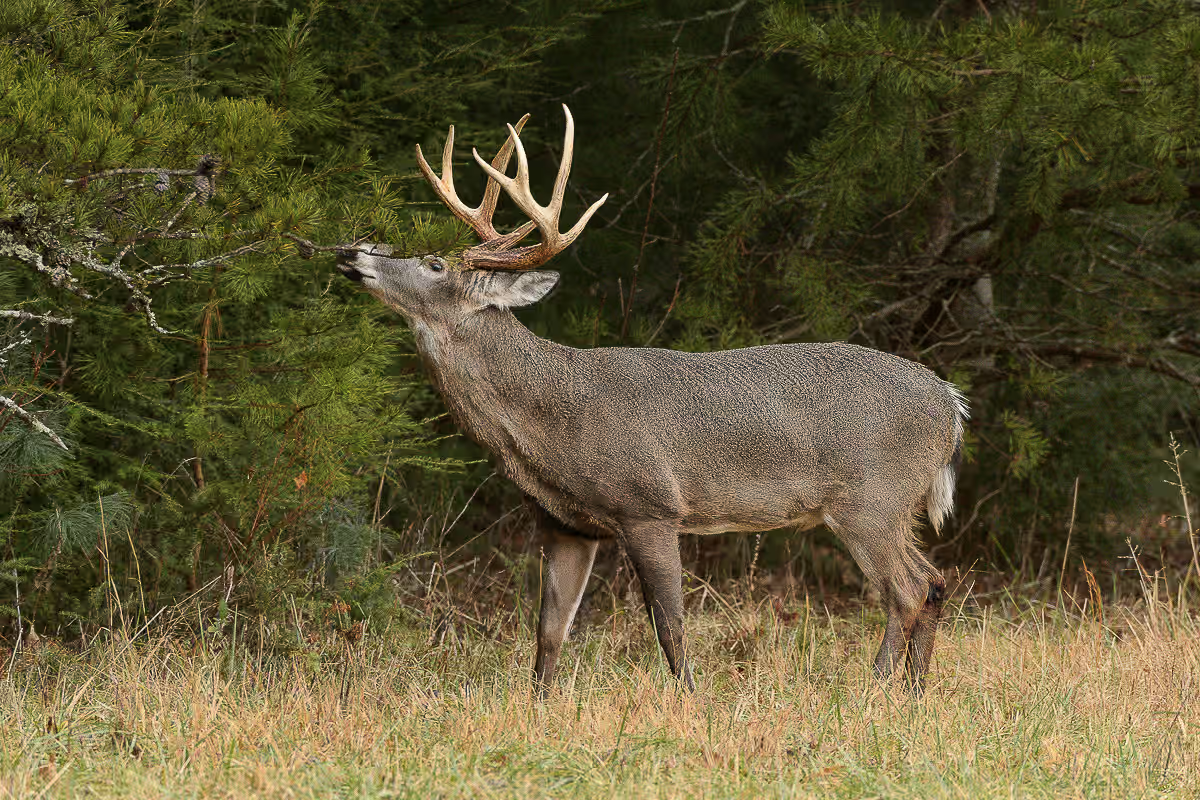
It’s late October 2011 and I’m still in the tree at 9:30 in the morning. I’m bowhunting a block of timber on a good friend’s family farm in Kentucky, and by the rules I used to hunt by, this sit should have ended an hour ago. It’s a cooler morning, no frost on the ground, but I remember thinking the weather was finally starting to feel promising.
Then I hear him. Dry leaves, steady footsteps, coming up the ridge toward me. While he’s making his way up the trail towards me a second buck steps out on a different trail. He figures out the first buck is there and quickly goes the other way. No fight, no posturing, he just wanted no part of him.
The buck coming up the ridge wasn’t chasing a doe or acting like he was on one’s trail. He’s headed back to bed and taking his time doing it. He passes me at 14 yards and I put an arrow through him.
That morning shaped my pre rut hunting tactics more than anything I’ve read or watched since. What killed that buck wasn’t a call, a scent, or some secret stand location. It was staying in the tree past the time I used to quit. The pre-rut rewards deer hunters who understand that the rules just changed, and this article covers what those new rules are, where to sit, and how to know when the window closes.
What the Pre-Rut Actually Is
Hunting the rut is three different hunts, not one. I laid that out in my rut hunting tactics article, and the pre-rut is the first of the three. In Kentucky that’s roughly the last two weeks of October, give or take a few days, depending on the year.
Here’s what makes it different from the following phases. A pre-rut buck is still himself, living in his core area, using the same handful of bedding areas, and still eating where the food is. What’s different is a bucks testosterone levels are rising. He’s opening scrapes, making rubs, and starting to move more in daylight.
That combination presents an opportunity. He’s more active than he was in September, but he’s still predictable. Once the first doe comes into estrous, that predictability diminishes. A buck that uses the same core bedding areas in late October might be two farms away by November 5th.
With that in mind, look at the pre rut not as a phase you hunt, but as a window that’s closing. Every day you don’t hunt it is a day you don’t get back, because the buck you’ve been watching all season up to this point is about to become a lot less predictable.
The Sign Shift: What Scrapes and Rubs Are Telling You
The first thing you’ll notice as the pre-rut builds is sign showing up fast. Rubs come first, then scrapes open up and start getting worked.
There’s some new science on why that sign matters more than we thought. The University of Georgia Deer Lab ran the first study of its kind and found that fresh rubs and scrapes actually glow in ultraviolet wavelengths that line up almost perfectly with a deer’s visual sensitivity. To another deer, that fresh rub on a cedar isn’t just a scent post. It’s a lit-up sign. Worth noting for timing too: at their study site, peak rubbing came earlier in the fall and peak scraping came later. That matches what I see in Kentucky. Rubs first, scrapes second.
Now the honest part. Research has also shown that most scraping activity happens at night. So a hot scrape doesn’t mean a buck will be standing over it at 8 a.m. What a scrape gives you is information, not a kill spot.
That’s how I use them. I hang cellular cameras on primary scrapes in the timber, the big community scrapes that get hit year after year. Those cameras tell me which bucks are in the area, which ones made it through the summer, and whether a buck is starting to show up in daylight. When a buck I want begins daylighting anywhere near that scrape, that’s my cue to move in. Not on the scrape itself. On the cover between the scrape and where I believe he’s bedding.
Pre-Rut Deer Hunting Tactics: Where to Sit
If your stands are still hanging on field edges in late October, you’re hunting last month’s pattern.
The September game was simple. Deer bedded in cover, walked to food in the evening, and the field edge was the show. By late October, that show has mostly moved back into the timber. Acorns are down, bucks are working sign inside the cover, and the mature ones aren’t strolling into open ag fields with much daylight left.
So I move in with them. Here’s what I’m looking for when determining where to hang a tree stand for the pre-rut:
- Inside the timber, off the open food. I want to be where a buck feels comfortable moving at 9 or 10 in the morning, and that’s not the middle of a bean field.
- Between bedding and the sign. Scrapes and rub lines tell you where he’s traveling. Bedding tells you where he starts and ends. I set up on the bedding side of that route, close enough to catch him in daylight, far enough that I’m not bumping him going in.
- A wind that works for the deer and for me. A mature buck wants to move with some advantage from the wind. I want a wind that lets him do that while still keeping my scent out of his path and out of his bedding.
- Access I can pull off in the dark. The best pre-rut stand in the county is worthless if you blow deer out of the timber walking to it. I’d rather hunt a decent spot with clean access than a great spot I can’t reach quietly.
One more thing on aggression. This is the time of year to hunt your better stands. I understand the instinct to save your best spots for November. I used to do it. But the buck you’re saving them for is patternable right now and might not be huntable at all in three weeks. Spend the good stands while the information is still good.
Hunt the Morning Longer
This is the tactic that killed my 2011 buck, and it’s the one I had to unlearn my way into.
For years I believed late mornings belonged to November. In October I’d hunt hard from first light until 8:30 or so, watch the woods go quiet, and climb down. It made sense to me at the time. Early season deer moved early, so once the movement died, the hunt was over. I have no idea how many bucks walked past my empty stand at 9:45 over those years. I’d rather not know.
Around that 2011 season I had just started making myself sit later in the morning during the last part of October. That buck came up the ridge at roughly 9:30, headed back to bed on his own schedule, in no hurry at all. He’d been somewhere all night doing buck things, and the cool morning kept him comfortable staying on his feet longer.
That’s the pre-rut morning. The bed-to-feed clock that ran September is breaking down. Bucks are checking sign, drifting back to bed late, and covering ground at hours that would have been dead a month earlier. If you’re only hunting the first two hours of daylight, you’re hunting the part of the morning that looks the most like early season and leaving before the part that looks like the rut.
My rule now is simple. Once late October arrives, morning sits get longer. If the weather is cool and the sign is fresh, I’ll ride a morning stand to 11:00 or later. Pack food, pick a comfortable setup, and give the woods time to move.
A cold front makes this even better. When a front knocks the temperature down in late October, deer keep moving deeper into the morning and start their evening earlier. Those are the mornings you clear your schedule for. My 2011 buck died on a cool morning that felt promising, and that’s not a coincidence.
When the Pre-Rut Is Over
Every tactic in this article has an expiration date, so you need to know the sign that it’s expired.
For me it’s simple: the first time I see a buck pushing a doe, the pre-rut is done. Not a buck walking through doe territory, not a young buck harassing a fawn. A buck with his neck out, dogging a doe that wants nothing to do with him yet. That’s seeking behavior, and it means the second phase of the rut has started.
You’ll see it in the sign too. Scrape activity falls off as breeding ramps up, because bucks quit tending sign when they can chase the real thing. When the scrapes that were getting pounded suddenly sit untouched under fresh leaves, believe what they’re telling you.
At that point, put this article down and pick up the rut hunting tactics playbook, because the patternable buck is gone and you’re hunting does and terrain instead. If you’re still building the foundation under all of this, my full guide on how to hunt whitetail deer covers the whole season, and how to read deer sign goes deeper on aging the scrapes and rubs you’ll be finding right now.