

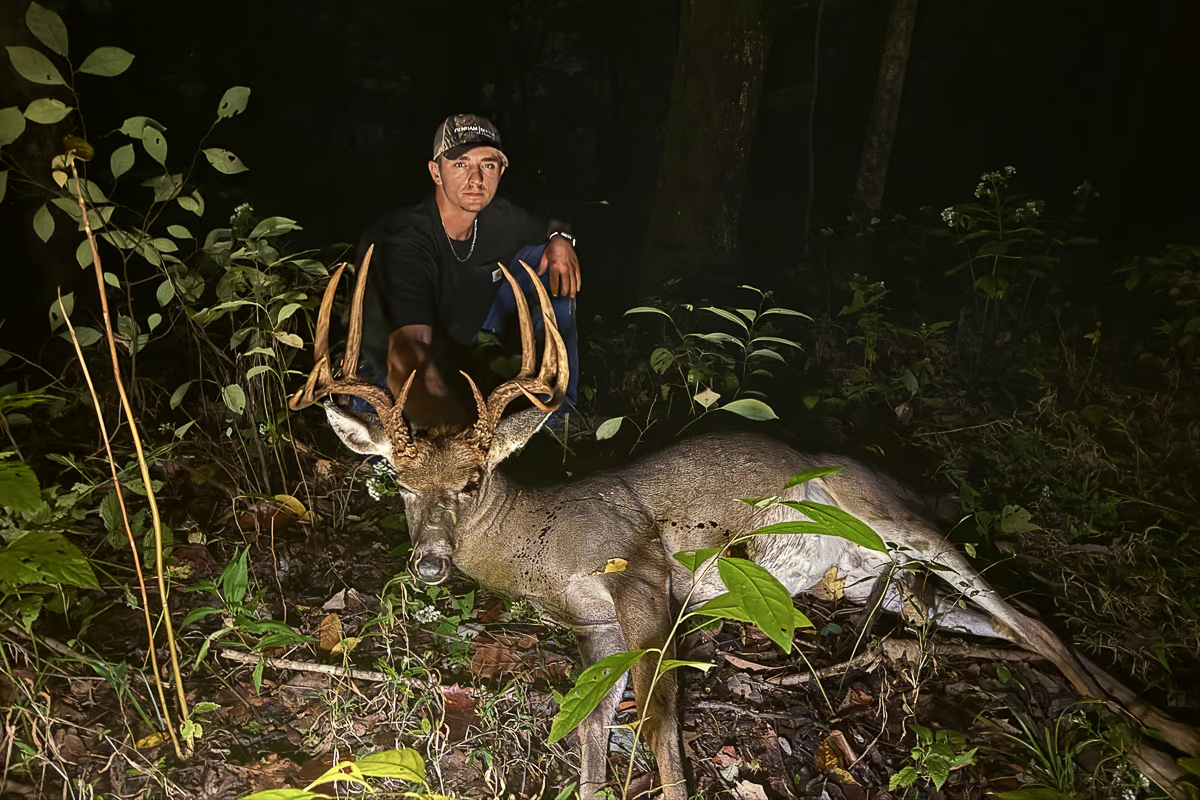
The first year I hunted him I had hundreds of daylight trail camera pictures and one encounter. I could barely make him out, 40 yards from my stand, quartering toward a scrape I’d been running a cell camera on since late September. It was still ten minutes until legal shooting light, so I watched him walk off.
Everything that put me in that tree came from data collected over the previous season. Patterning a mature buck means collecting time stamped locations, weather, and behavior on one specific deer across a season or more, then using all of it to guess when and where he’ll move in legal light. It is always a guess. The rest of this article is what to do with that data.
Patterning a mature buck is a system, not luck. Here’s how I build it, from the first trail cam photo to the sit where it pays off.
Find a Mature Buck to Hunt
You can’t pattern a buck you haven’t found. On the farms I hunt every year I start saving pictures and keeping notes on potential target bucks when they’re 2.5 to 3.5 years old. Most of them never make it to the age where I want to go after them. But when one does, I’ve already got a year or two of history on that deer before I ever hunt him on purpose, and that head start is worth more than any piece of gear I own.
On ground you’ve never hunted you’re starting cold. Trail cameras, glassing, looking for big sign, and observation sits are how you locate him. It takes longer and you’re going to waste some sits on deer that aren’t there. Once you’ve got him, the file starts.
Start Building the File
What you’re trying to do is gather as much useful information on that one particular buck as you possibly can. Where does he like to bed and feed from the early season through October? Does his core area change during that stretch? Does he move differently on a north wind than he does on a south wind? If he does, my guess is he’s bedding in different places depending on the wind. All of that applies to the late season too.
Plenty of hunters will tell you that you can’t kill a buck on a pattern during the rut. I partially agree with them, but that isn’t always the case. I’ve had plenty of bucks show up on the farm I hunt in Kentucky in November, stick around for a few days, then vanish, only to turn back up the next season in the same time frame. Don Higgins talks about this in his “Same Time, Same Place” article and on several podcasts. Bucks know which doe groups come into estrus first and they’ll revisit those locations year after year right around the same dates.
Every time you lay eyes on him or get a picture, log it. Date, time, location, wind direction, temp. If it’s private land, add how much human intrusion the property has been getting. If it’s public land, disregard that part. It’s going to be a given.
Put the Pieces Together
Once you’ve collected enough data you should start to see the puzzle come together. Where he likes to hang out at a particular time of year, and how his travel changes with different wind directions. Personally I’ll take my log and start dropping different colored pins on a map for every place I encountered him or got a picture, with the time attached. Doing this really lets you see how the buck is using the property, and it usually points you toward where he’s bedding if you haven’t figured that out yet.
Yea, it’s tedious. It’s also the difference between hunting a deer and hunting a spot and hoping.
Apply It to the Hunt
Once you have enough information and a good inclination on what the buck is likely to be doing, you’re ready to hunt him. If his pattern is taking him past a stand you already have hung, great, hunt it. But don’t hunt that set just because it’s there. If it isn’t in the ideal spot it’s the wrong stand, and every buck is different, so I prefer the hang and hunt approach. When I’m trying to capitalize on a pattern I pack my stand in with me and hang it that day in the tree the file tells me to be in. The saying goes the first sit is usually the best sit. I wholeheartedly agree with that.
Just because you’ve got a good idea what the buck is going to do doesn’t mean it’s okay to get sloppy. You still need to do your due diligence and figure out where to hang your stand so the buck thinks he has the wind advantage and you actually do. Access is just as important. If you bump him on the way in, your hunt was over before you ever got in the tree.
That buck in the opener walked past me ten minutes early. The file put me in the right tree that morning. It never has and never will decide when he shows up. The moral of that story is you can stack the odds as high as you want, but the deer still gets a say.