

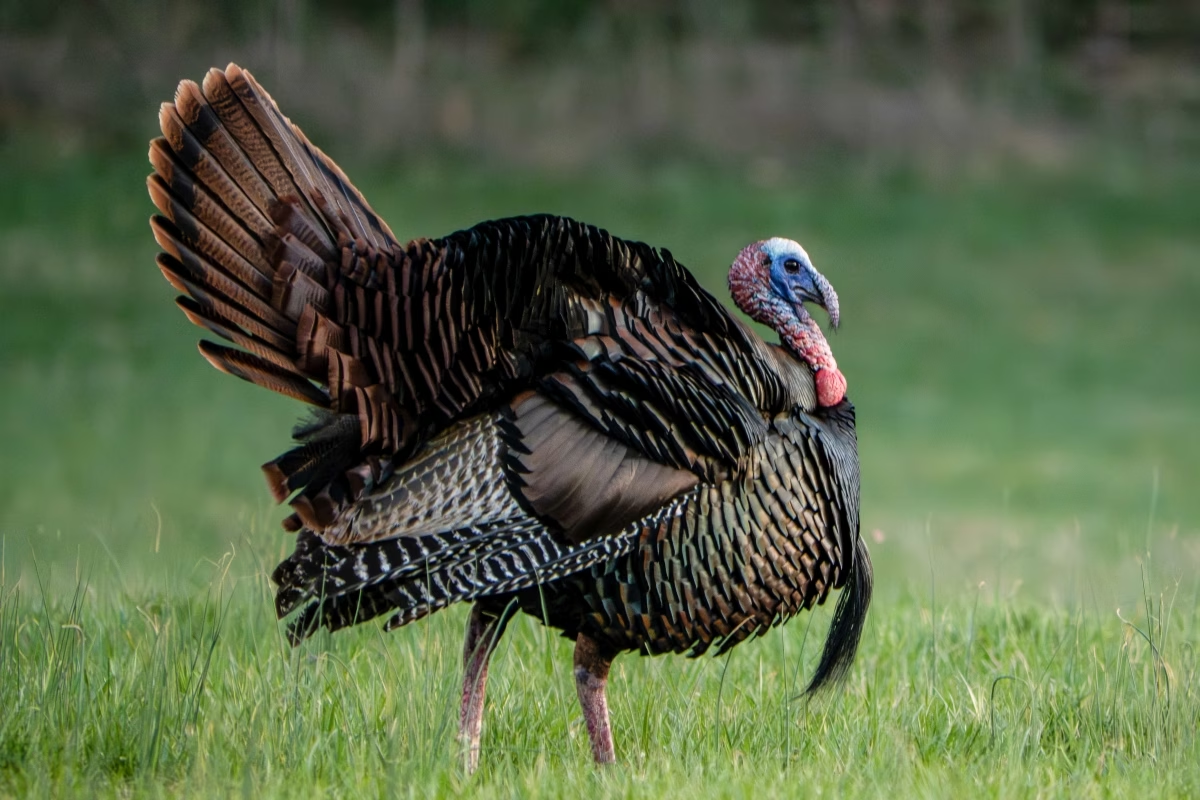
The Merriam’s gobbler came in hot, hammering at every call I made on my mouth call. By the time he made it to the open section of ponderosa pines, he was in shotgun range, fanned out with his white tips catching the early Idaho sun. I squeezed the trigger and sat there soaking in what had just transpired. Two subspecies down. Two to go.
That morning in Idaho changed the way I thought about turkey hunting. What started as a normal out-of-state trip became a full-blown pursuit. Turkey slams give that pursuit a name and a framework. The NWTF recognizes six official wild turkey slams, each requiring you to harvest specific subspecies or hit specific geographic milestones. You don’t need to finish in one season. Most hunters chip away over years, stacking trips and building a resume one bird at a time. This article breaks down every slam, the subspecies involved, and how to start planning your own.
The 6 Wild Turkey Slams recognized by the NWTF include:
- Grand Slam
- Royal Slam
- World Slam
- Canadian Slam
- Mexican Slam
- U.S. Super Slam
Grand Slam
The Grand Slam is where most turkey hunters start and is also the foundation for which several of the other slams build off of. To complete the turkey grand slam, a hunter must harvest each of the following sub species; an Eastern, Osceola, Rio Grande, and Merriam’s. As of the writing of this article, roughly 2000 hunters have register theirs with the NWTF.
Eastern Wild Turkey

For most turkey hunters, myself included, the Easter turkey is the sub species we grew up hunting. They can be found in every state east of the Mississippi River, as well as a handful of states west of the Mississippi River.
Osceola Wild Turkey

Osceola turkeys are a different story. They are found in Florida and nowhere else, which makes it the toughest wild turkey to plan a Grand Slam around. Public land access is tight, seasons open early, and the birds get hammered on every WMA that holds them. If you don’t want to deal with the heavily pressured public areas book a guide or lock down private land access well in advance. The guided and private land hunting opportunities for the Florida Osceola can book up fast.
Rio Grande Wild turkey

Rio Grande turkeys roam the southern Great Plains from Texas through Oklahoma, and Kansas, as well as many of the western states like California, Oregon, and Washington. Rio Grande turkeys have a reputation for being extremely responsive to the call. Don’t let this reputation fool you. Rio’s can be just as stubborn as an eastern turkey at times.
Merriam’s Wild Turkey

The Merriam’s turkey can be found in the Rocky Mountain states: Wyoming, South Dakota, Montana, Nebraska. They are most notably known for their white-tipped tail fans and high pitched gobbles. Be ready to hike during this hunt. The Merriam’s turkey can cover ground fast.
Single Season Grand Slam
Hunters looking to take the Grand Slam to the next level can attempt the single season Grand Slam.
A single-season turkey Grand Slam is possible with enough planning and a little luck. Start with the Osceola in March, chase Rios and Easterns in April, and finish with Merriam’s in May. Look for double-up states to save time and money. Kansas and Oklahoma hold both Eastern and Rio Grande birds.
Royal Slam

The Royal Slam builds off of the Grand Slam, adding the Gould’s turkey. The Gould’s turkey is the largest North American subspecies, and is primarily found in Mexico’s Sierra Madre mountains with small populations also existing in southern Arizona and New Mexico.
Nearly 800 hunters have registered a Royal Slam with the NWTF, making it the second most common slam behind the Grand Slam.
World Slam

The World Turkey Slam takes everything from the Royal and Grand Slams and adds the Ocellated turkey. The Ocellated lives in Mexico’s Yucatán Peninsula, primarily the Campeche region, and parts of Central America.
The Ocellated wild turkey is smaller than the other subspecies and covered in iridescent blue and green plumage. Forget sitting against a tree and running your favorite call. These hunts are spot-and-stalk through dense jungle in serious heat and humidity.
Roughly 400 – 500 hunters have completed the World Slam. Most hunters take five to eight years to finish this slam, spreading the cost and logistics across multiple seasons.
Canadian Slam & Mexican Slam
Next are the Canadian & Mexican Slams. To complete these two slams, a hunter must successfully harvest each of the subspecies the country has to offer.
Hunters aiming for the Canadian Slam will need to harvest the Eastern and Merriam’s subspecies found in the Canadian provinces. For the Mexican slam, you’ll need a Rio Grande, Gould’s, and Ocellated turkey, all taken in Mexico.
The U.S. Super Slam
Often referred to as the Mount Everest of turkey hunting is the U.S. Super Slam. To complete, a hunter must successfully harvest a wild turkey in every U.S. state with a huntable turkey population. That’s 49 states, with Alaska being the only one without a huntable population.
Only 22 hunters have registered their Super Slam with the NWTF but the actual number of hunter who’ve completed this task is slightly higher. Two hunters that come to mind who have completed the slam but not registered with the NWTF are Dave Owens, from the Pinhoti Project, and Doc Weddle, who has reportedly completed the slam 5 times.
The Super Slam takes commitment, years of planning/turkey hunting, and thousands of dollars to complete.
Bonus Slams
The NWTF recognizes six official slams, but turkey hunters have invented a few of their own.
The Washington Slam involves successfully hunting the three subspecies of wild turkeys found in the state of Washington: the Eastern, the Merriam’s, and the Rio Grande.It’s a regional challenge that takes advantage of the state holding three subspecies within its borders.
The Calendar Slam asks you to harvest a legal turkey in each month of the year. Only one hunter has ever pulled it off, Jeff Budz. Between varying fall and spring seasons across dozens of states, the logistics alone make it a nightmare.
Then there are Weapons Slams: complete any recognized slam using a specific weapon. Bow, crossbow, muzzleloader, .410, 20-gauge. Pick your poison. Each one adds a layer of difficulty that makes a familiar pursuit feel brand new.
How to Register Your Slam with the NWTF
While this step is not necessary, some individuals who have successfully completed a slam wish to make it official by registering their slam with the NWTF. To do this a hunter must harvest and register each of the sub-species of wild turkey required for the slam they are pursuing. Only once a hunter has successfully completed and registered the turkeys required for a slam will it be “book” official. After registration of the slam the hunter receives a pin and certificate for the Slam they completed.
You can register your turkey harvest online or by mail with the NWTF.
Tips for Completing a Slam
- Planning should be completed well before the season starts.
- Make sure you have a thorough understanding of the season dates, laws, and regulation for the area you plan on hunting.
- Research historical harvest data, contact biologists, or state wildlife agencies to determine where you should hunt.
- If hunting public land, be diligent with your online scouting to make sure you have several areas of interest before heading out. If you plan on hunting private land, make sure that you have contacted and gained permission from landowners before the hunt.
- Make sure that you have the proper turkey hunting gear needed for a particular area, as well as the correct hunting licenses, permits, or stamps.
Wrapping Up
That Merriam’s gobbler in Idaho was my second subspecies. The Eastern came first, back home in Kentucky where I’ve chased them since I was a kid. As for now, the Rio and Osceola are an unwritten chapter.
That’s the thing about turkey slams. It’s not just about a dead bird. It’s the planning for the following turkey season, stepping foot into unfamiliar turkey woods, and the experiences gained along the way that make it worth the ride.