

"We participate in affiliate programs and may earn a commission from products on this page" Learn More
During a morning turkey hunt in the spring of 2021, I found myself walking across a field of tall grass with a heavy dew. Lets just say my feet were soaked before I made it to the timber on the opposite side of the field. Wet feet aren’t the story. I would say every turkey hunter has had them at some point. The part that stuck with me was that the boots on my feet had about five hunts on them. They were the second pair I’d bought that spring, and the waterproofing had already failed. I hunted the rest of that morning in wet socks. That morning is the reason you’re reading a Crispi Nevada GTX review from a Kentucky turkey hunter instead of a western elk guide.
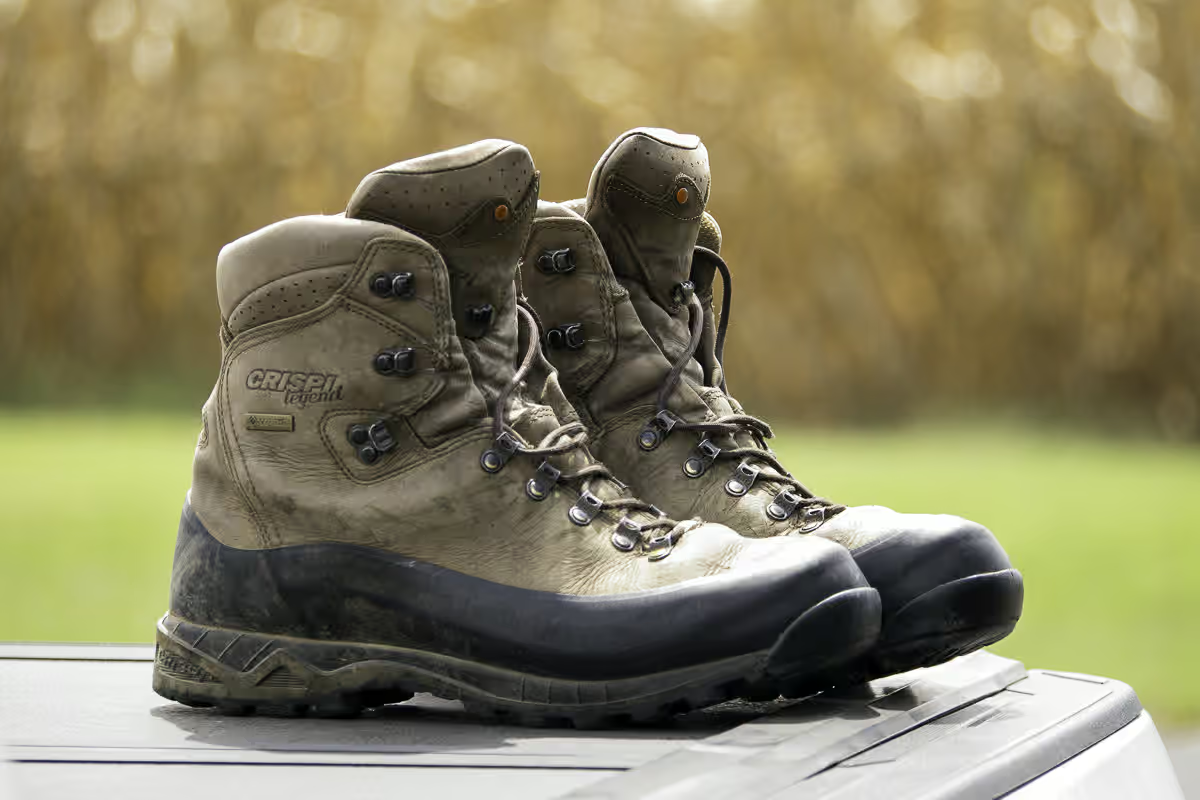
Here’s the short version. If you’re thinking about buying a pair of Crispi Nevada GTX boots it’s a no brainer. Mine have been going four years strong. That’s four spring turkey seasons, three deer seasons, nine states, and hundreds of miles. They have never leaked, and nothing on them has failed. The rest of this is the long version, including what they don’t do well and who should keep their $400.
One thing before the details. I bought these boots online with my own money in 2022 and paid $390. Nobody sent them to me.
What I bought and what you’re paying for
Mine are the uninsulated Nevada GTX, which Crispi lists as the non insulated version. Regular width, size 11.5, the same size I wear in everything else. I didn’t size up, and I’m still running the stock footbed.
The specs, stated once. It’s an 8 inch boot with a water repellent nubuck leather upper and a Gore Tex liner. Under that is a Vibram outsole over a polyurethane midsole, with a rubber rand around the bottom. Crispi builds an ankle support system into the upper that it calls ABSS. On the stiffness scale retailers use it’s a Flex 3, and it weighs about 1.9 pounds per boot. Crispi added the uninsulated version to the Nevada line in 2017. Today it runs $430 to $450 depending on where you buy.
What does Flex 3 mean for your feet? Stiff. Out of the box they are a stiffer boot, which is what I prefer. I’ve read reviews that say they take some break in and that they run a little narrow for some feet. Yea, that’s probably true for some feet. I have an average foot and never noticed either one. No hot spots, no heel slip, no toe bang on the downhills. They felt great right out of the box. If you’ve got a wide foot, Crispi makes the Nevada in an EE.
Crispi Nevada GTX review: four seasons, nine states
Most of what’s written about this boot comes from western hunters chasing elk and mule deer. That’s fair. That’s who Crispi built it for. I’m a Kentucky turkey hunter with a day job who drives all night to walk public ground, and I wanted to know if it would hold up to that. It has.
So far I’ve worn these boots for turkeys in Mississippi, Kentucky, Tennessee, Illinois, Indiana, Alabama, Idaho, Washington, and Wyoming. I’ve deer hunted in them in Kentucky and Tennessee. Here’s how they did.
Wet ground
The first trip that told me I’d made the right call was an early season turkey hunt in Mississippi during the 2022 season. I put in 10 to 15 mile days the entire trip, and never once did my boots let me down. That was my first spring in them. It was also the first spring in years I didn’t have to think about my boots.
Since then they’ve been across creeks, through tall grass in heavy dew, and through all day rains turkey hunting. My feet have stayed dry every time. They have never leaked. I’ll come back to that dew field in a minute, because the lesson in it is about money, not boots.
Heat and cold
These are uninsulated, so let’s talk about both ends. In May, when I’m walking long distances after gobblers, my feet can get hot. But so does everything else. That’s a May problem, not a boot problem.
The coldest I’ve hunted in them is the teens. Here’s what I learned. If my feet started to sweat, they’d start to get cold. As long as my feet stayed dry and I wasn’t sitting in a stand all day, I was fine. That’s why I run a lightweight to midweight merino sock from First Lite and never a heavy sock. My feet sweat easily, and a heavy sock in this boot makes that worse, not better. Sweat is the enemy in an uninsulated boot, not the air temperature.
It’s important to note that my feet don’t get cold easily. If yours do, and you sit all day in December, this isn’t your late season boot. More on that below.
Terrain and ankle support
I’ve hunted in these boots on everything from timber and ag fields in Kentucky to steep ground in Idaho and Washington. They handled all of it. The stiffness and the ankle support worked the way Crispi says they will. I’ve never rolled an ankle in these boots, and I’ve put them in plenty of places where I could have. Not once. Sidehilling out west is where you feel the difference between this boot and a soft lace up. The stiff sole does the work your ankles were doing before.
Traction has never been a problem. Wet leaves, slick rock, mud, creek banks. I don’t have a slide story to tell you, and that’s the point.
In the stand
For deer, I’ve spent full days in a tree stand in these boots with no foot fatigue. If they start to feel a little tight after a few hours, I loosen the laces slightly and that takes care of it.
Noise and scent
Do you need rubber boots for scent control? I don’t worry about scent control on boots. Play the wind. Rubber boots help some, but you can’t eliminate your scent, and I’m not picking my boots based on it. As for noise, these are as quiet as any other boots I’ve hunted in.
Where the Nevada GTX falls short
Every gear recommendation needs the downsides. Here are the ones I’ve found.
The price is real. If you hunt a handful of weekends a year, don’t put an ungodly amount of miles on your boots, and don’t want to spend $400 on them, there are several other brands that will do fine for half the price. I mean that. The boots I wore before these were good boots for the hunter I just described.
Cold feet in a stand. If your feet run cold and you sit all day in December, this isn’t your boot. Buy the Nevada Legend GTX with 200 grams of insulation, or wear a pac boot for those sits. The uninsulated Nevada is a walking boot that happens to be fine in a stand for a guy whose feet don’t get cold.
One pair is one pair. You’ll find complaints on user review sites about Crispi soles wearing fast or the rand coming loose. My soles still have plenty of tread after hundreds of miles, and nothing has come apart. But I’m one hunter with one pair, and I’d be lying if I told you that settles it.
And now the confession. I have not treated the leather on these boots the way you’re supposed to. Not once in four years. Anytime they get muddy I clean all the mud off after the hunt, and that’s the extent of my boot care. That’s it. The leather looks worn. That’s to be expected when you don’t treat it and hunt in them as much as I have. Crispi sells a waterproofing cream for a reason, and fitters say to treat the leather on a Gore Tex boot the same as any other leather boot. Don’t be me. The membrane keeps the water out, but the leather needs the help. The fact that they still haven’t leaked says more about the boot than it does about me.
Questions people ask about the Crispi Nevada GTX
Do Crispi Nevada GTX boots run true to size?
For me, yes. I wear an 11.5 in most things and ordered an 11.5 regular. No sizing up, stock footbed, and four years later they fit the way they did on day one.
Is the Crispi Nevada GTX insulated?
It comes both ways. The Nevada GTX I own is uninsulated. The Nevada Legend GTX carries 200 grams of insulation for late season hunts. Same 8 inch height, same Flex 3 stiffness.
How long does the Nevada GTX take to break in?
For my feet, no time at all. They’re stiff by design and they stay stiff, but I never had a hot spot or a blister. Other hunters report a break in period, so plan on a few walks before a 12 mile day if your feet are picky.
Are Crispi Nevada GTX boots good for turkey hunting?
Four spring seasons across nine states says yes, if you’re a turkey hunter who wants the best gear and covers ground. They’re overkill for a hunter who sits at a field edge 200 yards from the truck. And in May your feet will get warm on the long walks, like they would in any leather boot.
The math on a $400 boot
Before this pair I wore rubber boots, Mucks and LaCrosse, and lace up boots from Irish Setter and Danner. Good boots. They just couldn’t hold up to what I was putting them through. The waterproofing would fail, or they’d just start to fall apart. I played the game of buying a new pair of boots every spring because they were falling apart by the end of turkey season.
Those boots ran me $150 to $200 a pair. Four springs of that is $600 to $800, and every one of those pairs is gone. The Crispis were $390 once, and I’m still wearing them. That morning in the dew field is when I started doing that math.
Yea, you are going to spend more money up front. But you will end up saving in the long run. And you’ll stop thinking about your boots when you’re supposed to be thinking about the game you’re hunting. When my current pair start to fail, I’ll be buying another pair exactly like them.
Four seasons in, the most expensive boots I ever bought are the cheapest ones I’ve ever owned.